








What's Happening?
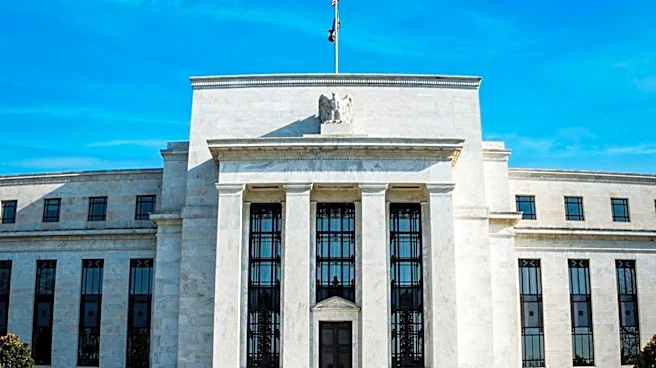
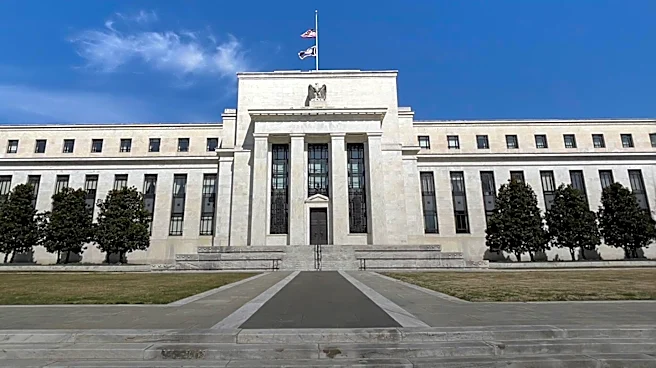
The Federal Reserve's annual stress test has revealed that all 32 of the largest U.S. banks are well-capitalized and capable of withstanding a severe economic downturn. The test, which simulates a hypothetical recession scenario, projected that these
banks could absorb over $708 billion in loan losses while continuing to lend to households and businesses. The scenario included a 39% decline in commercial real estate prices, a 30% drop in home prices, and a rise in unemployment to 10%. Despite these challenges, the banks maintained capital levels above the minimum regulatory requirements. The projected losses included approximately $200 billion in credit card loans, $160 billion in commercial and industrial loans, and $75 billion in commercial real estate. The Federal Reserve noted that while aggregate capital levels declined by 1.6 percentage points, higher projected interest income helped mitigate the impact.
Why It's Important?
This stress test is crucial as it reassures stakeholders about the stability and resilience of the U.S. banking system in the face of potential economic crises. By demonstrating that major banks can endure significant financial shocks, the test helps maintain confidence among investors, regulators, and the public. The ability of these banks to continue lending during a severe recession is vital for economic stability, as it supports businesses and consumers, potentially mitigating the depth and duration of a downturn. The results also provide insights into the effectiveness of regulatory measures implemented since the 2008 financial crisis, aimed at strengthening the financial system's resilience.
What's Next?
The Federal Reserve will continue to monitor the financial health of these institutions and may adjust regulatory requirements based on the findings of the stress test. Banks may also use the results to refine their risk management strategies and capital planning processes. Additionally, the outcomes could influence future policy decisions regarding financial regulations and economic support measures. Stakeholders, including policymakers and financial analysts, will likely scrutinize the results to assess the readiness of the banking sector to handle future economic challenges.