

What's Happening?
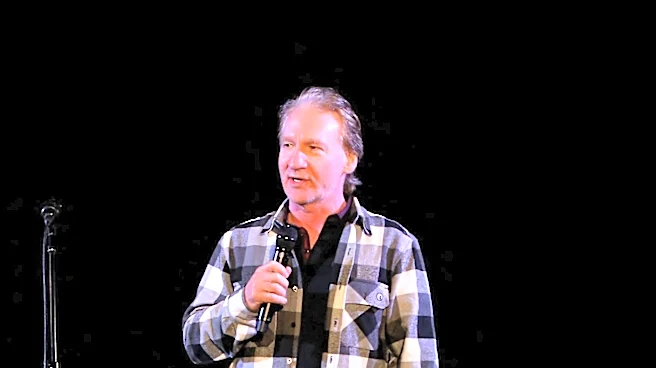
Comedian and talk show host Bill Maher engaged in a debate with fellow comedian Howie Mandel on Maher's 'Club Random' podcast regarding differing attitudes towards offending others. Maher, who is 70, argued that at their age and financial standing, they
should have the freedom to express themselves without fear of 'cancel culture.' He suggested that being 'set for life' should grant them immunity from the financial repercussions of controversial statements. Mandel, however, expressed a contrasting view, stating that he is genuinely concerned with how his actions and words affect others. He recounted an instance where he lost a significant business campaign due to an X-rated stand-up bit, emphasizing that his concern was not about the money but about losing people's respect and trust. Maher playfully mocked Mandel's stance, implying that caring about offending others was itself 'offensive' to his philosophy of honesty over sensitivity.
Why It's Important?
This discussion between Bill Maher and Howie Mandel highlights a significant cultural and societal debate in the U.S. concerning freedom of speech, 'cancel culture,' and personal responsibility in public discourse. Maher's perspective reflects a segment of public opinion that prioritizes uninhibited expression, particularly for established figures, viewing concerns about offense as a constraint on honesty and comedic freedom. Conversely, Mandel's viewpoint underscores the growing emphasis on empathy and accountability, where the impact of words on others, including potential loss of respect and trust, is a primary consideration. This ongoing tension affects various industries, including entertainment, media, and even corporate branding, as public figures and companies navigate the fine line between authentic expression and avoiding widespread backlash. The debate also touches upon generational differences in how public figures perceive their roles and the expectations placed upon them by their audiences and sponsors.
What's Next?
The conversation between Maher and Mandel is indicative of a continuing dialogue within the entertainment industry and broader society about the boundaries of humor and free speech. This debate is likely to persist, influencing how comedians, public figures, and media personalities approach their content and interactions. We may see more artists and creators explicitly aligning with either Maher's stance on unbridled expression or Mandel's emphasis on audience impact. This could lead to a further polarization of content, with some platforms and creators catering to audiences who value unfiltered commentary, while others prioritize inclusive and less offensive material. The incident also serves as a reminder for businesses and brands to carefully consider the public personas of individuals they associate with, as the risk of 'cancel culture' remains a tangible threat to endorsements and partnerships.
Beyond the Headlines
The exchange between Maher and Mandel delves into deeper philosophical questions about the role of comedians and public figures in society. Maher's argument for absolute freedom of expression, particularly for those who are financially secure, raises questions about privilege and the responsibility that comes with a platform. Mandel's counter-argument, focusing on the emotional and relational impact of one's words, speaks to a shift in cultural values where empathy and consideration for diverse audiences are increasingly valued. This dynamic reflects a broader societal struggle to balance individual liberties with collective well-being and respect. The 'cancel culture' phenomenon, while often criticized, also represents a form of collective accountability, where audiences can exert influence over public figures and institutions. This ongoing negotiation between individual expression and societal expectations will continue to shape cultural norms and the landscape of public discourse in the U.S.