





What's Happening?
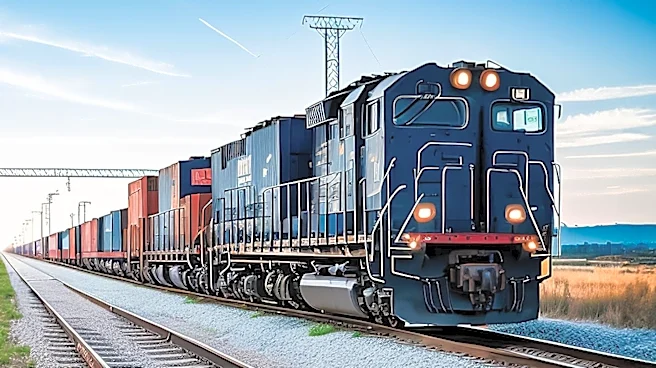
Texas Attorney General Ken Paxton has formally requested that the Surface Transportation Board (STB) reject the proposed merger between Norfolk Southern Corp. and Union Pacific Corp. In a Monday filing, Paxton's office argued that the merger should be blocked
if it is determined that it would lead to increased shipping rates for consumers and businesses. The STB's 2001 rule mandates that mergers must "enhance competition" in the public interest, a standard that will be rigorously applied during the anticipated year-long review of this deal. This proposed merger aims to create the first coast-to-coast freight network in the nation. While Paxton's office has taken a stance against the merger if it results in higher rates, the state of Texas itself has not adopted an official position on the matter, distinguishing it from some of its neighboring states where Republican counterparts have expressed different views.
Why It's Important?
This intervention by the Texas Attorney General highlights significant concerns regarding market concentration and potential anti-competitive practices within the U.S. freight rail industry. A merger of this scale, creating a coast-to-coast network, could drastically alter the competitive landscape, potentially leading to reduced choices for shippers and, consequently, higher transportation costs. For U.S. industries reliant on freight rail, such as agriculture, manufacturing, and energy, increased shipping rates could translate into higher operational costs, which may then be passed on to consumers through elevated prices for goods. The STB's decision will set a precedent for future large-scale mergers in critical infrastructure sectors, emphasizing the importance of balancing corporate growth ambitions with public interest and competitive market principles. The outcome will directly impact the economic efficiency and competitiveness of numerous businesses across the country.
What's Next?
The Surface Transportation Board is expected to conduct a comprehensive, year-long review of the proposed merger between Norfolk Southern Corp. and Union Pacific Corp. During this period, the STB will evaluate the potential impacts on competition, shipping rates, and overall public interest, as mandated by its 2001 rule. Attorney General Paxton's filing will be a key consideration in this review, adding pressure on the board to scrutinize the merger's potential effects on consumers and businesses. Other stakeholders, including various industries, consumer advocacy groups, and potentially other state attorneys general, are likely to submit their own analyses and opinions. The rail companies involved will need to present compelling arguments demonstrating how the merger would benefit the public and enhance competition, rather than diminish it. The final decision by the STB will determine the future structure of a significant portion of the U.S. freight rail system.
Beyond the Headlines
The debate surrounding this mega rail merger extends beyond immediate shipping rates to broader questions of national infrastructure, economic resilience, and regulatory oversight. The creation of a single coast-to-coast freight network could offer efficiencies and improved logistics for some, but it also raises concerns about the potential for a single point of failure in the national supply chain and reduced accountability due to diminished competition. This situation underscores the ongoing tension between the economic benefits of consolidation and the public interest in maintaining robust, competitive markets. The STB's handling of this case will be closely watched as a test of its regulatory power and its commitment to its mandate of ensuring fair competition. The long-term implications could include shifts in regional economic development, changes in intermodal transportation strategies, and potentially increased calls for stricter antitrust enforcement in other essential sectors.