






What's Happening?
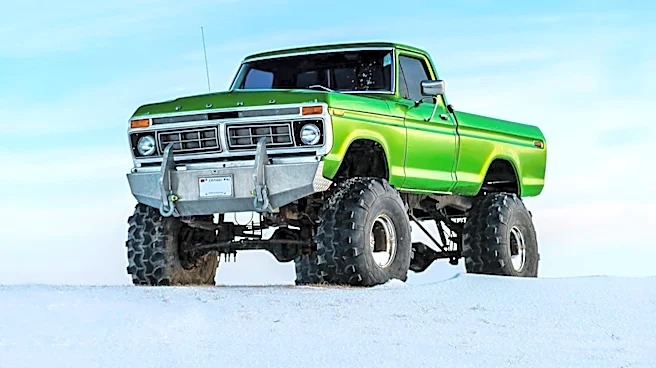
The sixth-generation Ford F-Series trucks, produced from 1973 to 1979, are colloquially known as 'dentsides' due to a distinctive inward-pushed line along their side panels, differentiating them from the 'bumpside' fifth-generation models (1967-1972)
which featured an outward-popping line. This 'dentside' era introduced several significant innovations that propelled the F-Series' popularity. Key among these was the debut of the Club Cab (also known as SuperCab), a two-door truck with an extended cabin, and the release of the first F-150 model in the mid-1970s. The F-Series became the best-selling U.S. truck in 1976, a title it has largely maintained since. The dentside generation also offered a wide array of engine options, ranging from a 240-cubic-inch V6 to a 460-cubic-inch V8, alongside various trim levels like the luxurious Lariat.
Why It's Important?
The 'dentside' Ford F-Series trucks played a pivotal role in shaping the U.S. automotive market, particularly in the truck segment. The introduction of the F-150 during this period was a game-changer, establishing a model that would become an enduring symbol of American utility and versatility. The Club Cab's extended cabin addressed a growing consumer need for more passenger space in trucks, broadening their appeal beyond purely agricultural or construction uses to families and recreational users. The diverse engine options and trim levels allowed Ford to cater to a wider demographic, solidifying the F-Series' market dominance. This era's innovations laid the groundwork for the F-Series' continued success and its status as a perennial best-seller, influencing subsequent truck designs and consumer expectations for decades.
What's Next?
The legacy of the 'dentside' F-Series continues to influence the design and marketing of modern Ford trucks. The principles of offering a wide range of configurations, engine choices, and comfort features, first popularized during this era, remain central to Ford's strategy for its F-Series lineup. Enthusiasts and collectors continue to value 'dentside' models for their classic design and historical significance, contributing to a vibrant aftermarket for restoration and customization. Ford's ongoing commitment to innovation, as seen in the evolution from 'dentsides' to the F-Series Super Duty trucks in the late '90s and beyond, suggests a continuous adaptation to changing consumer demands while building upon the foundational successes of past generations.
Beyond the Headlines
The 'dentside' F-Series represents more than just a period in automotive design; it reflects a significant cultural shift in how Americans viewed and used trucks. Moving beyond their traditional workhorse image, these trucks began to embody a blend of utility, comfort, and personal expression. The F-150's emergence as a best-seller during this time coincided with a broader trend of suburbanization and a growing demand for vehicles that could serve multiple purposes, from hauling to family transport. The enduring appeal of these older models in the collector's market also speaks to a nostalgia for a particular era of American manufacturing and design, where vehicles were often characterized by their robust construction and distinctive styling. This generation of F-Series trucks helped cement the pickup truck's iconic status in American culture.