





What's Happening?
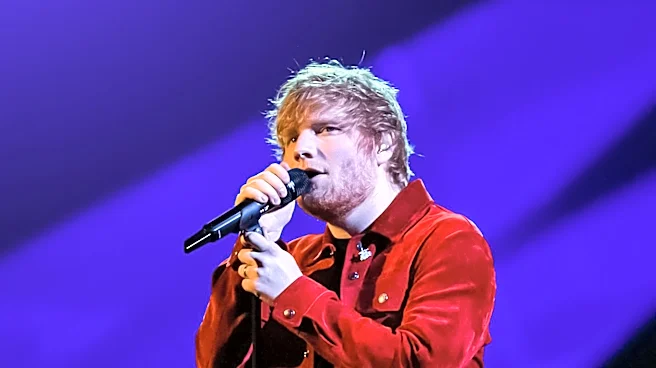
An Israeli-American advocacy group, the Israeli-American Council (IAC), has launched a petition urging Ed Sheeran to remove rapper Macklemore from the remaining dates of his Loop Tour. The demand follows Macklemore's opening set at a MetLife Stadium concert,
where he used the platform to promote a 'one-sided anti-Israel political message.' During his performance, Macklemore called for 'Free Palestine' and performed his song 'Hind's Hall,' while images from Gaza and other political messaging were displayed on the stadium's large screens. The IAC's petition, addressed to Sheeran, tour organizers, and venues, argues that the concert was not a political rally and that an opening act should not use a global platform to advance a biased political agenda. The group specifically criticized the presentation for relying on 'selective imagery, biased messaging, and disputed claims presented to a massive audience as fact, without context or complexity.' The song 'Hind's Hall' is noted for its support of the pro-Palestinian campus protest movement, with its title referencing Columbia University's Hamilton Hall, which was occupied by demonstrators.
Why It's Important?
This incident highlights the increasing intersection of entertainment and political activism, particularly concerning the Israeli-Palestinian conflict, within the U.S. The IAC's petition underscores a growing concern among some groups about the use of large public platforms, such as concerts, for political messaging, especially when perceived as one-sided or lacking context. This situation could set a precedent for how artists and event organizers manage political content during performances, potentially leading to stricter guidelines or increased scrutiny of opening acts. It also reflects the broader societal debate on freedom of expression versus responsibility, and the role of celebrities in influencing public opinion on complex geopolitical issues. The involvement of a prominent artist like Ed Sheeran, even indirectly, draws significant attention to the conflict and the differing perspectives within the U.S. on how it should be discussed publicly.
What's Next?
The IAC is demanding Macklemore's removal from the remaining tour dates and is urging organizers to establish clear boundaries on political messaging during concerts. They are also encouraging supporters to contact Live Nation directly to demand action. The immediate next step will be to observe the responses from Ed Sheeran, the tour organizers, and Live Nation to the petition and the public pressure. Their decision could influence future policies regarding political expression at major entertainment events. Depending on the outcome, this situation could lead to further protests or boycotts from either side of the issue. It may also prompt other artists and event promoters to re-evaluate their stance on political content in live performances, potentially leading to more explicit contractual clauses or guidelines for performers.
Beyond the Headlines
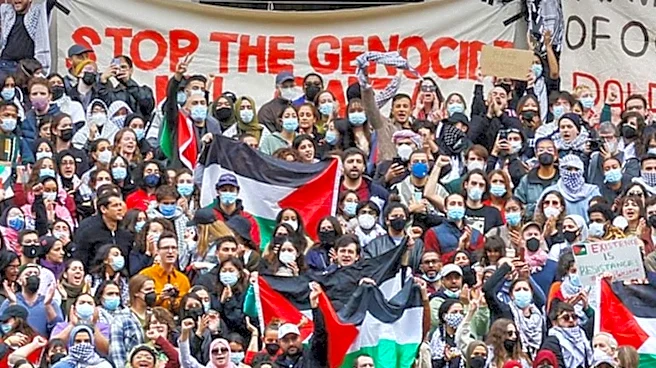
Beyond the immediate controversy, this event touches upon the ethical responsibilities of artists and event organizers in providing a platform for political discourse. It raises questions about the nature of 'entertainment' in an increasingly politicized world and whether audiences expect or desire political commentary from performers. The incident also highlights the power of advocacy groups to mobilize public opinion and exert pressure on cultural institutions. The reference to 'Hind's Hall' and the pro-Palestinian campus protest movement connects this event to broader discussions about free speech, academic freedom, and the methods of protest on U.S. university campuses. This situation could contribute to a re-evaluation of the boundaries between artistic performance and political activism, and the role of cultural events in shaping public understanding of global conflicts.