




What's Happening?
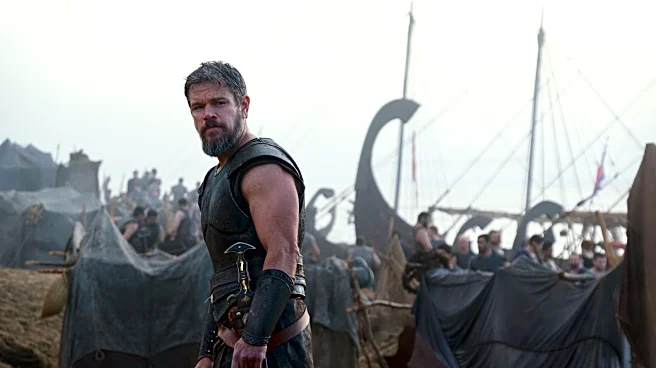
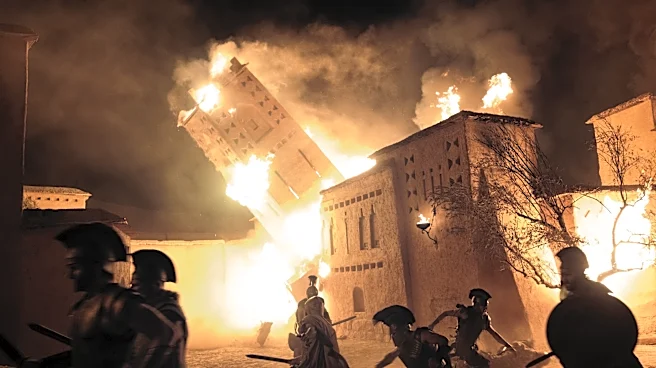
Christopher Nolan's latest film, 'The Odyssey', an adaptation of Homer's epic poem, has garnered near-universal acclaim from critics. The $250 million Imax blockbuster is being hailed as one of Nolan's best works, with many critics suggesting it could
be a frontrunner for the Best Picture Oscar. The Guardian's Peter Bradshaw awarded it five stars, praising its ambition and flair. Similarly, the Independent's Clarisse Loughrey described it as Nolan's defining work, while the Telegraph's Robbie Collin called it the best film of the year so far. Despite some criticism regarding its narrative choices and character portrayals, the film is celebrated for its grand vision and cinematic spectacle.
Why It's Important?
The critical success of 'The Odyssey' underscores Christopher Nolan's continued influence in the film industry, particularly in the realm of epic storytelling. Its potential as an Oscar contender highlights the film's impact on both audiences and critics, potentially setting a new standard for adaptations of classic literature. The film's reception also reflects the industry's ongoing interest in large-scale, visually stunning productions that push the boundaries of traditional cinema. This success could influence future projects, encouraging filmmakers to invest in ambitious adaptations of literary classics.
What's Next?
As 'The Odyssey' continues to receive critical acclaim, it is likely to gain momentum in the upcoming awards season. The film's reception may prompt discussions about its narrative choices, particularly regarding the portrayal of female characters and the adaptation of classic texts for modern audiences. Industry stakeholders, including studios and filmmakers, may look to 'The Odyssey' as a model for future epic adaptations, potentially leading to a resurgence of interest in classical literature in cinema.
Beyond the Headlines
The film's adaptation choices, particularly the portrayal of female characters, have sparked discussions about gender representation in cinema. Critics have noted the film's focus on male redemption and solidarity, raising questions about the balance of gender narratives in epic storytelling. This could lead to broader conversations about the role of women in classical adaptations and the importance of diverse perspectives in filmmaking.