




What's Happening?
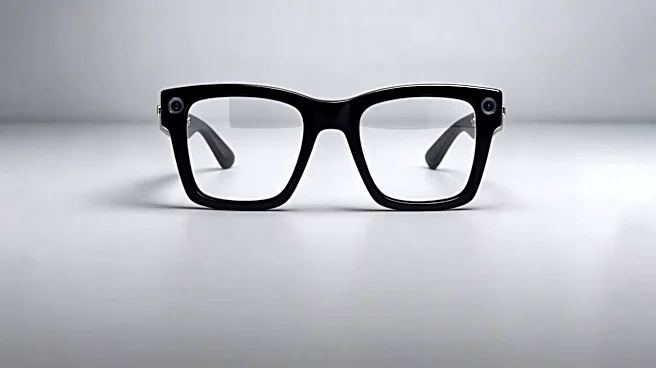
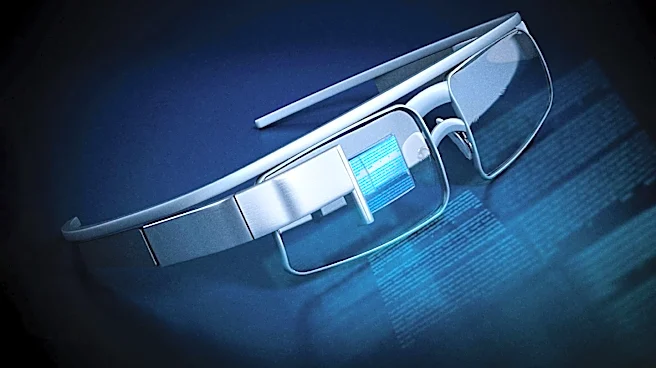
Lifehacker, in collaboration with CNET, ZDNET, and Mashable, has named the XBX by XReal video display glasses as the best television-related gift for the 2026 holiday season. This selection deviates from traditional television sets, emphasizing innovation
in form factor and use case over screen size and picture clarity, which are already highly advanced in conventional 4K TVs. The XBX glasses offer a portable, personal viewing experience, simulating a 142-inch TV screen. They feature 1080p resolution per eye, a peak brightness of 1,600 nits, a 120Hz refresh rate, HDR10 support, and real-time SDR-to-HDR upscaling. Weighing only 62 grams, these glasses connect via USB-C, require no separate battery, and are priced under $300. The product is highlighted for its versatility, serving as a computer monitor, a private viewing device for shared living spaces, and particularly for use during travel, such as airplane flights.
Why It's Important?
This recommendation signifies a potential shift in consumer perception of what constitutes a 'television' and how visual media is consumed. By prioritizing portability, personal immersion, and versatile use cases, Lifehacker's choice challenges the long-standing industry focus on larger, higher-resolution static displays. This could influence product development in the consumer electronics sector, encouraging manufacturers to invest more in wearable display technologies and personal viewing solutions. For consumers, it offers an alternative to traditional large-screen TVs, especially for those with limited space or a desire for private viewing experiences. The affordability of the XBX glasses, under $300, also makes advanced personal display technology more accessible, potentially broadening its market appeal beyond early adopters. This trend could impact the home entertainment market, creating a new segment for personal, on-the-go viewing devices.
What's Next?
The endorsement from prominent tech review outlets like Lifehacker could boost the visibility and sales of the XBX by XReal glasses and similar wearable display technologies. Other manufacturers may observe the market reception and potentially accelerate their own development in this niche. Consumers might increasingly consider these portable options as viable alternatives or complements to their existing home entertainment systems, especially for travel or personal use. The holiday shopping season will serve as an initial test of consumer interest in this non-traditional 'TV' gift. Furthermore, the success of such devices could prompt content creators and streaming services to optimize their offerings for personal, immersive viewing experiences, potentially influencing future media consumption habits.
Beyond the Headlines
The emergence of wearable display glasses as a 'best TV' gift points to a broader cultural shift towards personalized and private media consumption. In an increasingly connected yet individualized society, devices that offer an escape into a personal virtual theater, even in public spaces like airplanes, resonate with a desire for tailored experiences. This trend also raises questions about shared viewing experiences and the future of the living room as a central entertainment hub. Ethically, the widespread adoption of such devices could lead to discussions about digital isolation versus enhanced personal freedom. Legally, as these devices become more sophisticated, intellectual property rights for content viewed in private virtual spaces might become a more complex issue. Culturally, it represents an evolution in how we interact with visual media, moving from a communal, fixed-location experience to a highly personal, portable one.