
What's Happening?
HBO's upcoming television adaptation of the 'Harry Potter' book series is generating significant fan criticism following the release of new promotional materials. A set of individual character posters,
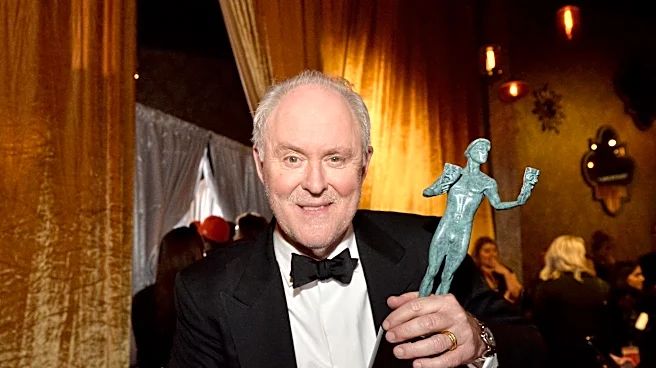
featuring primary characters holding their wands, has drawn particular attention. Fans are expressing strong disapproval over the redesigned Elder Wand, wielded by John Lithgow's Dumbledore. Unlike its depiction in previous film adaptations, which featured an elegant, bead-like design, the new series portrays the Elder Wand as a simple, unvarnished stick of wood. This change is seen by many as a significant departure from established visual lore. The overall marketing efforts for the series have been met with a muted reception, with this specific design choice becoming a focal point of negative feedback. The series is set to debut its first season in just over a month, and the road to its release has been marked by various controversies, including discussions surrounding J.K. Rowling and concerns from original film creatives about the reboot's necessity.
Why It's Important?
The controversy surrounding the Elder Wand's redesign highlights the challenges faced by creators when adapting beloved franchises with deeply ingrained fan expectations. For the 'Harry Potter' series, the Elder Wand is not merely a prop but a crucial magical artifact, one of the three Deathly Hallows, central to the conclusion of the entire saga. Altering its appearance, even seemingly minor details, can have significant ramifications for how fans perceive the authenticity and fidelity of the adaptation. This backlash could impact initial viewership and overall fan engagement, potentially affecting the series' long-term success and its ability to attract both new audiences and loyal fans. The decision to simplify the wand's design, while potentially aiming for a more ancient or rustic look, has alienated a significant portion of the fanbase who value consistency with established visual elements from the books and previous films. This situation underscores the delicate balance between creative interpretation and fan expectations in major franchise reboots.
What's Next?
As the release date for HBO's 'Harry Potter' series approaches, the production team will likely continue with its marketing campaign, potentially facing ongoing scrutiny over design choices and other creative decisions. The immediate future will reveal whether the fan backlash over the Elder Wand's appearance will subside or intensify as more promotional content is released and as the series premiere draws nearer. The reception of the first season will be critical in determining how fans and critics ultimately view these creative liberties. Warner Bros. will be closely monitoring audience reactions, as the success of this reboot could influence future adaptations of other major franchises. The ongoing debate may also prompt further discussions among the creative team about how to balance artistic vision with the strong expectations of a dedicated global fanbase for subsequent seasons.
Beyond the Headlines
The debate over the Elder Wand's redesign touches upon broader themes of adaptation, artistic license, and fan ownership in popular culture. While creators often seek to bring fresh perspectives to established narratives, they frequently encounter resistance from fans who have a strong emotional connection to original interpretations. This incident raises questions about the extent to which adaptations should adhere to previous visual representations versus forging new artistic paths. The choice to depict the Elder Wand as a simple stick could be interpreted as an attempt to emphasize its ancient origins and raw power, contrasting with the more ornate depiction in the films. However, the negative reaction suggests that for many fans, the established visual iconography holds significant weight. This dynamic between creative freedom and fan expectation is a recurring challenge in the entertainment industry, particularly with properties that have a multi-generational following, highlighting the complex relationship between creators and their audience in the digital age.