




What's Happening?
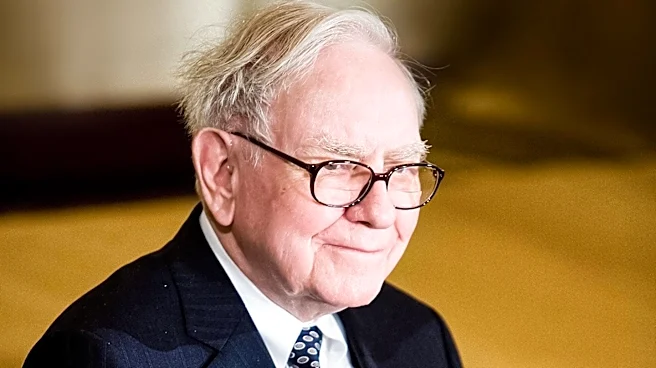
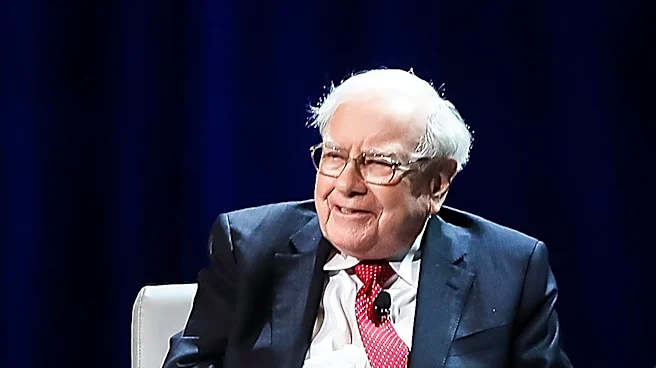
Warren Buffett has stated that he could be 'very happy' living on $100,000 a year, a sentiment he expressed in a 2017 PBS NewsHour interview. This perspective is consistent with his lifestyle, as he continues to reside in the Omaha house he purchased
in 1958 and has publicly stated a preference for a McDonald's burger over a $100 meal. Buffett, whose net worth was approximately $147 billion in October 2026 according to Forbes, stepped down as Berkshire's CEO at the end of 2025 and as chairman in September 2026. He has pledged to donate his Berkshire Hathaway shares to philanthropy. Research from Wharton and Stanford suggests that while happiness generally increases with wealth, the nature of happiness can change, and for some, it may level off around an income of $100,000 per year.
Why It's Important?
Buffett's public statements and lifestyle choices challenge conventional societal views that equate immense wealth with increased personal happiness. His perspective offers a counter-narrative to consumerism and materialism, suggesting that contentment can be found independently of vast financial resources. This stance is particularly significant given his status as one of the world's wealthiest individuals, potentially influencing public perception of wealth and success. For economic stakeholders, his continued commitment to philanthropy, rather than personal consumption, redirects billions of dollars towards charitable causes, impacting various sectors of society. His example also provides a unique case study for researchers examining the relationship between income, wealth, and subjective well-being, reinforcing findings that beyond a certain point, additional income may not proportionally increase happiness.
What's Next?
As Buffett continues his philanthropic pledges, his substantial wealth will increasingly be channeled into various charitable foundations, impacting numerous social and economic initiatives. His personal example of living modestly despite extreme wealth is likely to persist as a point of discussion in financial and lifestyle media, potentially inspiring others to re-evaluate their own consumption habits and financial goals. The ongoing distribution of his fortune through his family foundations will continue to shape the philanthropic landscape for years to come. His legacy will not only be defined by his investment acumen but also by his unique philosophy on wealth and happiness, which may continue to influence public discourse on these topics.
Beyond the Headlines
Buffett's philosophy on wealth and happiness delves into deeper ethical and psychological dimensions. His ability to maintain a simple lifestyle amidst extraordinary affluence highlights a detachment from material possessions that is rare among the ultra-rich. This challenges the very foundation of capitalist ideals that often link success directly to accumulation. His views could spark broader conversations about societal values, the pursuit of happiness, and the ethical responsibilities that come with immense wealth. It also raises questions about the true drivers of human satisfaction, suggesting that intrinsic factors like purpose, relationships, and contribution may outweigh extrinsic factors like material wealth. His life serves as a practical demonstration of these principles, offering a powerful, real-world example for individuals and institutions alike.