




What's Happening?
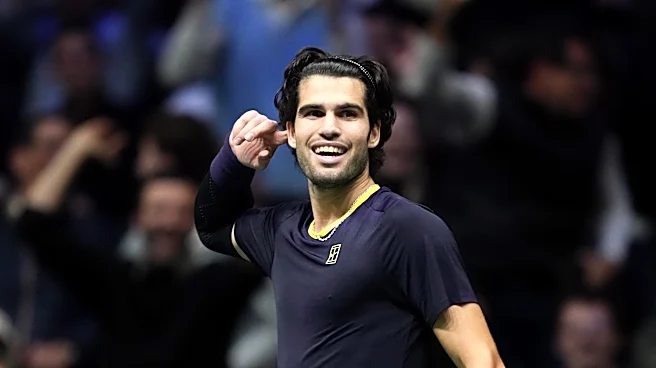
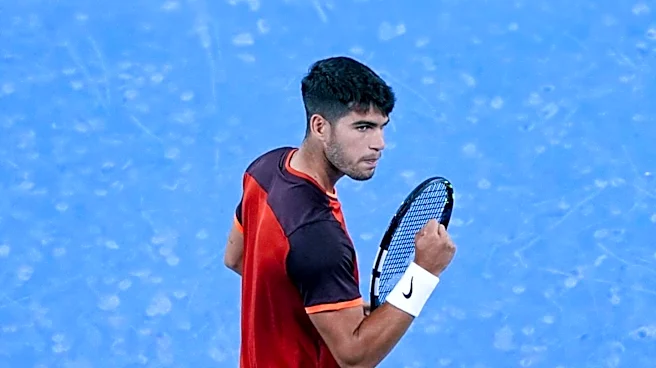
Jamie Murray, working as a pundit for Sky Sports Tennis, has voiced criticism regarding the size of Carlos Alcaraz's support team. Murray observed Alcaraz in the gym before a match with six people watching him on a foam roller, questioning the necessity
of such a large entourage. Alcaraz's current team includes his coach Samuel Lopez, his parents, his older brother, fitness coach Juanjo Moreno, agent Albert Molina, trainer Alberto Lledo, and physio Fran Rubio. Despite Murray's comments, Alcaraz's team has overseen significant success, including seven Grand Slam titles, nine Masters 1000 titles, and 13 other ATP Tour championships by the age of 23. Alcaraz recently parted ways with long-time coach Juan Carlos Ferrero but continued working with Lopez.
Why It's Important?
Jamie Murray's critique highlights a growing trend in professional sports where athletes are surrounded by extensive support teams. While such teams are designed to optimize performance, Murray's comments suggest a potential for over-management or an unnecessary level of entourage, which could be perceived as distracting or excessive. For Carlos Alcaraz, the effectiveness of his team is evident in his remarkable achievements at a young age. However, public commentary from respected figures like Murray can spark debate about the optimal support structure for athletes and the balance between comprehensive care and potential over-reliance. This discussion is relevant to the broader sports industry, influencing how aspiring athletes and their families approach team building and resource allocation.
What's Next?
Carlos Alcaraz is currently competing in the ATP Finals, where he is a favorite to win. Despite the criticism regarding his team's size, his focus will be on his performance on the court. The ongoing success of Alcaraz will likely continue to validate his current support structure, regardless of external opinions. However, the discussion initiated by Murray could prompt broader conversations within the tennis community about the evolving nature of player support and the potential benefits or drawbacks of large entourages. Future decisions by Alcaraz or other top players regarding their teams might be subtly influenced by such public discourse, even if their immediate success remains the primary driver.
Beyond the Headlines
The debate over the size of an athlete's support team delves into the philosophical aspects of modern sports performance. On one hand, a comprehensive team can provide specialized expertise in every aspect of an athlete's life, from physical conditioning and nutrition to mental preparation and media management. On the other hand, a large entourage might create a 'bubble' around the athlete, potentially isolating them or fostering an environment of excessive dependence. This issue also touches upon the financial implications, as maintaining such a team requires significant resources. The contrast between Alcaraz's large team and Rafael Jodar's more 'lowkey' partnership with his father, as mentioned by Murray, illustrates different philosophies on athlete development and support, raising questions about what truly constitutes an optimal environment for achieving peak performance and long-term success.