







What's Happening?
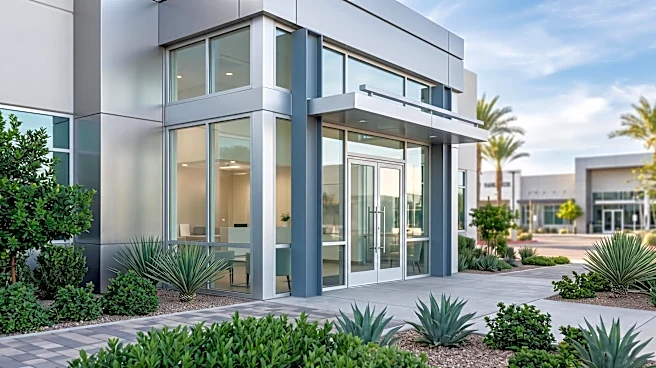
Arizona is experiencing a notable trend of converting vacant office buildings into medical facilities. This shift is driven by increasing demand for healthcare services and property owners seeking to repurpose underutilized commercial spaces. Projects
in Chandler and Mesa exemplify this trend, with Phoenix's medical office construction pipeline reaching 436,396 square feet in Q2 2026, marking a 67% year-over-year increase. This adaptive reuse strategy offers an alternative to new construction for healthcare providers seeking accessible locations. However, such conversions necessitate thorough evaluations of zoning regulations, parking availability, and existing plumbing, HVAC, and electrical systems, as these factors significantly influence redevelopment costs and long-term viability. The trend reflects a broader movement in commercial real estate to adapt to evolving market needs, particularly in sectors with sustained growth like healthcare.
Why It's Important?
The conversion of office spaces to medical facilities in Arizona holds significant importance for both the healthcare industry and commercial real estate investors. For healthcare providers, it offers a faster and potentially more cost-effective way to expand their footprint and meet growing patient demands, especially in urban and suburban areas where new construction might be challenging or time-consuming. This can lead to improved access to medical services for residents. For commercial real estate owners and investors, these conversions present an opportunity to revitalize underperforming assets and generate new revenue streams from properties that might otherwise remain vacant. It also signifies a strategic repositioning of commercial properties in response to market shifts, moving away from traditional office use towards specialized healthcare functions. The success of these projects, however, hinges on careful financial planning and a deep understanding of both real estate and healthcare sector requirements.
What's Next?
The trend of office-to-medical conversions in Arizona is expected to continue as healthcare demand remains robust and property owners seek innovative ways to utilize vacant commercial spaces. Future developments will likely involve more detailed feasibility studies focusing on the specific infrastructure requirements of medical facilities, such as specialized plumbing for labs or enhanced electrical systems for advanced equipment. Investors and developers will need to closely monitor local market conditions, zoning changes, and healthcare provider needs to identify suitable properties for conversion. Additionally, partnerships between real estate firms and healthcare organizations may become more common to streamline the conversion process and ensure that the repurposed spaces meet clinical standards. The long-term success of this trend will depend on the ability to balance renovation expenses with potential rental income and the ongoing demand for medical office space.
Beyond the Headlines
Beyond the immediate economic and healthcare benefits, the rise of office-to-medical conversions in Arizona highlights a broader evolution in urban planning and commercial real estate. It underscores the adaptability of urban infrastructure and the potential for existing buildings to serve new purposes, contributing to sustainable development by reducing the need for new construction. This trend also reflects changing work patterns and the declining demand for traditional office spaces, prompting a re-evaluation of urban cores. Ethically, these conversions can improve community health by bringing medical services closer to residents, particularly in underserved areas. Legally, it may lead to adjustments in zoning laws and building codes to facilitate such adaptive reuse projects. Culturally, it signifies a shift in how we perceive and utilize commercial properties, moving towards more flexible and community-centric functions.