


What's Happening?
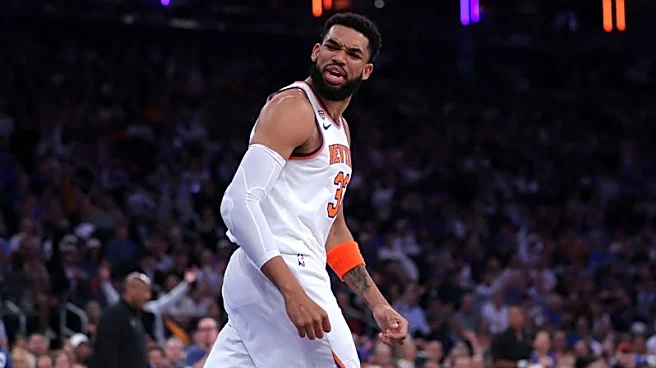
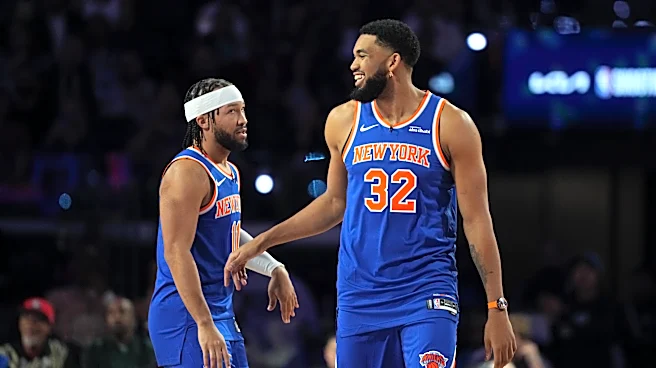
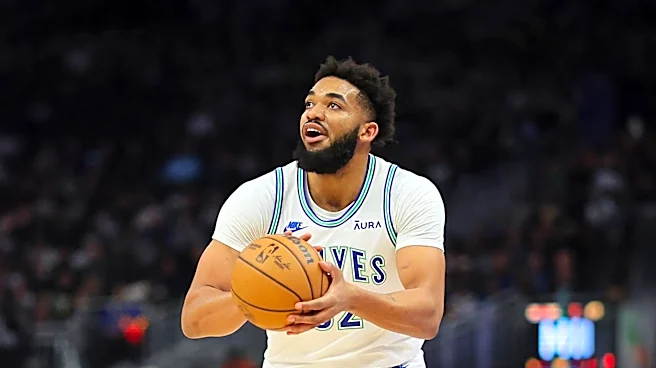
Negotiations for a contract extension between the New York Knicks and star center Karl-Anthony Towns have stalled, with reports indicating the two sides are 'tens of millions apart.' Towns is eligible for a four-year extension worth up to $276 million,
and he has a $61 million player option for the 2027-28 season. The Knicks have reportedly offered contracts starting between $45-50 million annually, which is significantly below Towns' projected max salary of $61.6 million. This financial disparity is largely influenced by Knicks owner James Dolan's public opposition to operating above the NBA's second apron, a luxury tax threshold that imposes severe restrictions on team building. While Towns has expressed a strong connection to New York and a willingness to take less than the maximum, the exact discount he is prepared to accept remains a key point of contention. The team aims to retain Towns while maintaining financial flexibility, a goal complicated by the increasing costs of their core roster, including future extensions for players like Jalen Brunson.
Why It's Important?
The stalemate in Karl-Anthony Towns' contract negotiations carries significant implications for the New York Knicks' long-term roster construction and competitive outlook. Owner James Dolan's firm stance against exceeding the second apron of the luxury tax directly impacts the team's ability to retain its star players and make future acquisitions. The second apron introduces stringent penalties, limiting trade flexibility and the ability to sign free agents, which could hinder the Knicks' capacity to sustain a championship-contending team. If Towns does not agree to a substantial discount, the Knicks might be forced to trade other key players like OG Anunoby, Mikal Bridges, or Josh Hart to stay below the threshold. This situation highlights the tension between a team's desire to keep its core intact and the financial realities imposed by the NBA's collective bargaining agreement. The outcome of these negotiations will determine whether the Knicks can maintain their current successful roster or if they will need to make difficult decisions that could alter their competitive window.
What's Next?
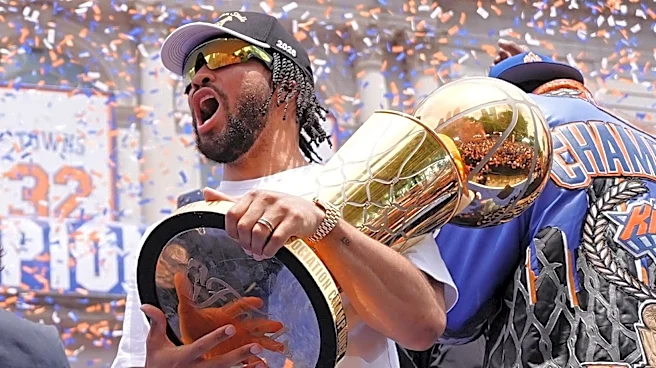
The immediate future holds continued, albeit stagnant, discussions between Karl-Anthony Towns and the New York Knicks regarding his contract extension. With training camp approaching, an agreement before its commencement appears unlikely. Towns is under contract for the upcoming season and has a player option for the following year, giving both parties some time to reach a resolution. However, if a deal is not struck, Towns could become an unrestricted free agent in 2027, potentially attracting offers from other teams with significant cap space, such as the Golden State Warriors, Milwaukee Bucks, or Chicago Bulls. This scenario could be used as leverage against the Knicks to increase their offer. The Knicks also face the looming extension eligibility of Jalen Brunson next offseason, which will further complicate their financial planning. The team's ability to navigate these complex negotiations while adhering to James Dolan's financial directives will be crucial in determining the longevity of their current championship-winning core.
Beyond the Headlines
The ongoing contract dispute between Karl-Anthony Towns and the New York Knicks, driven by owner James Dolan's financial philosophy, underscores a broader trend in the NBA where new collective bargaining agreement rules, particularly the second apron, are forcing teams to make difficult roster decisions. Commissioner Adam Silver's stated goal of promoting 'parity of opportunity' across the league is manifesting in situations like this, where even successful teams must carefully manage their payroll to avoid punitive restrictions. This shift could lead to more frequent player movement and prevent the formation of long-term 'super teams' by making it financially challenging to retain multiple max-contract players. For the Knicks, the situation also highlights the delicate balance between team loyalty and individual financial aspirations. While Towns has expressed a desire to remain in New York, the gap in contract figures suggests a significant personal sacrifice would be required, raising questions about the long-term sustainability of player-team relationships under the new economic landscape of the NBA.