





What's Happening?
Amazon is actively restructuring its physical retail presence, as evidenced by its Q3 2026 earnings report showing $5.7 billion in physical store net sales, a 2% year-over-year increase. The company has announced plans to close some Amazon Go and Amazon Fresh
brick-and-mortar locations, converting a number of these into Whole Foods Markets. This strategic shift aims to optimize its physical footprint. Additionally, Amazon is exploring new retail concepts, including an experimental big-box format in the Chicago suburbs, though the specific business model for this new store type remains undefined. Groceries and everyday essentials constituted approximately half of the units Amazon sold in Q3, indicating a strong focus on this sector, with much of this growth driven by delivery services rather than in-store purchases. Amazon's CEO, Andy Jassy, highlighted the overall retail business's progress, noting significant unit growth and gross sales increases across its entire operation, which includes both online and physical stores.
Why It's Important?
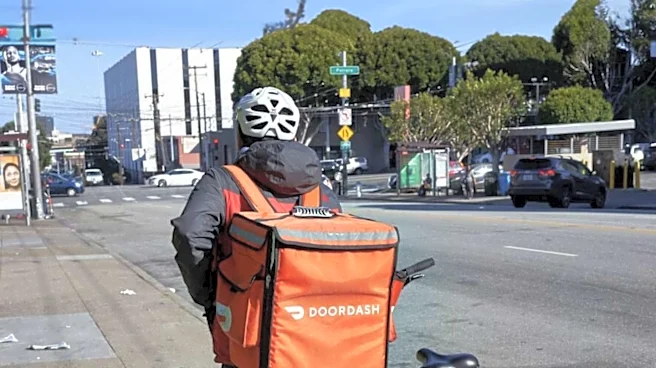
This strategic realignment by Amazon carries significant implications for the U.S. retail landscape, particularly for grocery chains and mass merchants. By converting Amazon Go and Amazon Fresh stores into Whole Foods Markets, Amazon is consolidating its grocery brand presence and potentially leveraging the established customer base and supply chain of Whole Foods. This move could intensify competition in the grocery sector, forcing traditional retailers to re-evaluate their own physical and online strategies. The emphasis on delivery for groceries and everyday essentials, which accounted for half of Amazon's Q3 unit sales, underscores the growing importance of e-commerce and rapid fulfillment in the retail industry. Competitors will need to focus on matching Amazon's delivery capabilities and online offerings, rather than solely competing on physical store formats. The experiment with a big-box format also signals Amazon's continued ambition to penetrate various retail segments, potentially disrupting established players in the general merchandise category.
What's Next?
The ongoing conversions of Amazon Go and Amazon Fresh stores into Whole Foods Markets are expected to continue, potentially leading to increased volume and market share for Whole Foods. The performance and business model of the experimental big-box format in the Chicago suburbs will be closely watched, as its success could dictate future expansion into this retail segment. Amazon's continued investment in its delivery infrastructure, particularly for groceries and everyday essentials, suggests further enhancements and expansion of its ultra-fast delivery services like Amazon Now. Retailers will likely respond by strengthening their own omnichannel strategies, focusing on both in-store experience and efficient online fulfillment. The upcoming Q3 2026 Quarterly E-commerce Sales release from the Census Bureau, scheduled for November 19, will provide further data on the overall e-commerce growth and its share of total retail, offering insights into the broader market trends influencing Amazon's strategy.
Beyond the Headlines
Amazon's evolving physical retail strategy reflects a broader industry trend where the lines between online and offline commerce are increasingly blurred. The company's approach of using physical stores not just as sales points but also as extensions of its online fulfillment network highlights a sophisticated integration strategy. This could lead to a redefinition of what a 'store' means in the digital age, moving beyond traditional brick-and-mortar models to hybrid formats that support both immediate purchases and rapid online order fulfillment. The ethical implications of such market dominance, particularly in the grocery sector, could also become a point of discussion, concerning fair competition and consumer choice. Furthermore, the data-driven insights Amazon gains from its diverse retail experiments will likely inform future innovations, potentially setting new industry standards for efficiency, customer experience, and supply chain management across the retail landscape.