





What's Happening?
The Miami Marlins have developed a unique offensive strategy centered around hitting triples, a play that has become rare in modern baseball. As of Friday, the Marlins are tied with the Arizona Diamondbacks for the Major League lead with 24 triples. This
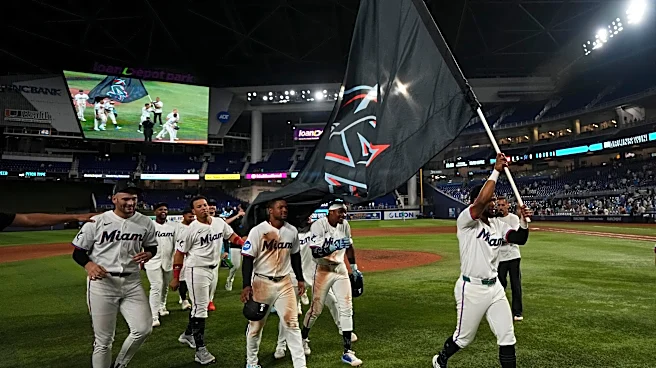
approach is notable as it contrasts with the prevalent focus on home run power in the league. The Marlins utilize contact hitting, speed, and aggressive baserunning to convert hits into triples, particularly exploiting the spacious outfield of their home stadium, loanDepot Park. Key players like Xavier Edwards and Otto Lopez have been instrumental, each recording six triples, contributing significantly to the team's total. The park's dimensions, with deep gaps and a large outfield, facilitate this strategy by allowing more balls to land in areas that are difficult for outfielders to cover quickly.
Why It's Important?
The Marlins' strategy highlights a shift in baseball tactics, emphasizing speed and baserunning over sheer power. This approach not only differentiates the team in a league dominated by home run hitters but also showcases the potential for diverse playing styles to succeed. By focusing on triples, the Marlins are able to leverage their players' strengths and the unique characteristics of their home field to gain a competitive edge. This could influence other teams to reconsider their strategies, especially those with similar player profiles or stadium dimensions. Additionally, the Marlins' success with this approach could attract fans who appreciate the excitement and dynamism of aggressive baserunning, potentially increasing the team's popularity and marketability.
What's Next?
As the season progresses, the Marlins will likely continue to refine and capitalize on their triple-focused strategy. Other teams may begin to adapt their defensive strategies to counteract the Marlins' aggressive baserunning, potentially leading to a tactical evolution in the league. The Marlins' performance could also prompt discussions among analysts and coaches about the viability of alternative offensive strategies in baseball. If successful, this approach might inspire other teams to explore similar tactics, particularly those with players who excel in speed and contact hitting.