




What's Happening?
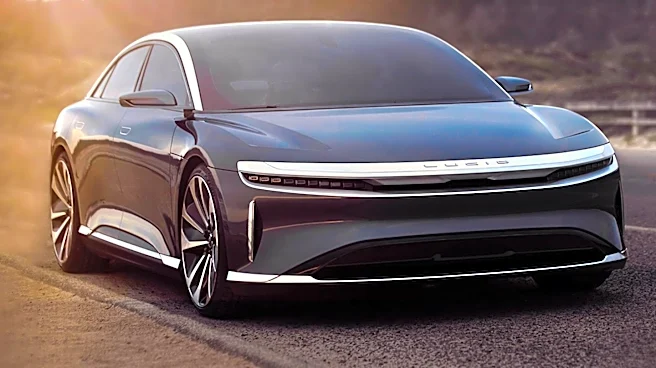
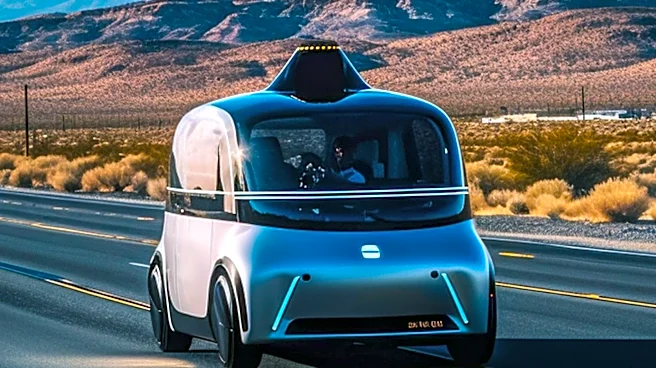
Lucid Group, in collaboration with Uber and Nuro, has commenced fully driverless testing of Lucid Gravity robotaxis on public roads across several San Francisco Bay Area cities. This initiative involves a fleet of over 100 updated vehicles, with a commercial
launch targeted for the first quarter of 2027. A significant component of this program is Uber's commitment to purchase at least 35,000 Lucid vehicles, which will be equipped with Nuro's autonomous platform. This development is poised to significantly influence Lucid's production strategies, capital requirements, and the balance between retail and fleet customer sales in the coming years. The testing phase is a crucial step towards integrating autonomous vehicle technology into mainstream transportation services.
Why It's Important?
This partnership and the large-scale commitment from Uber could fundamentally reshape Lucid Group's long-term volume narrative, providing a substantial boost to its production outlook. For Lucid, which has faced questions regarding demand, pricing power, and inventory, this deal offers a clear path to scaling its luxury EV platform into meaningful volumes. The commitment for 35,000 vehicles provides a degree of demand visibility that could alleviate near-term funding pressures and address concerns about its cash runway and ongoing losses. The success of this collaboration could also validate the broader autonomous vehicle market, potentially increasing demand for AI infrastructure, compute, sensors, and data networks across the industry. Conversely, any delays in Lucid's ability to ramp up Gravity production or meet cost targets could exacerbate existing financial risks, as highlighted by recent analyst downgrades.
What's Next?
The immediate focus for Lucid Group will be on successfully ramping up production of the Gravity model and ensuring the seamless integration of Nuro's autonomous platform to meet the 2027 commercial launch deadline. The company's ability to manage working capital and avoid constant shareholder dilution will be critical. The performance of the more than 100 updated test vehicles in the San Francisco Bay Area will provide valuable data and insights, influencing the refinement of the autonomous technology and operational strategies. Future announcements regarding production milestones, financial performance, and the progress of the driverless testing will be closely watched by investors and industry observers, as they will directly impact Lucid's stock valuation and its ability to secure fresh funding.
Beyond the Headlines
This collaboration between an EV manufacturer, a ride-sharing giant, and an autonomous technology provider signifies a deeper trend towards the convergence of electric vehicles and self-driving capabilities in the future of transportation. The large fleet order from Uber suggests a potential shift in the automotive industry, where fleet sales driven by autonomous services could become a significant revenue stream for EV manufacturers. This development also raises broader questions about urban planning, regulatory frameworks for autonomous vehicles, and the future of human employment in the transportation sector. The ethical and safety implications of widespread robotaxi deployment will also come under increased scrutiny as these technologies move closer to commercialization, potentially leading to new legal and societal challenges.