






What's Happening?
Digital payments are fundamentally changing how money is exchanged in the U.S., moving away from physical cash towards electronic transfers. These transactions encompass various methods, including credit and debit cards, mobile wallets, online bank transfers,
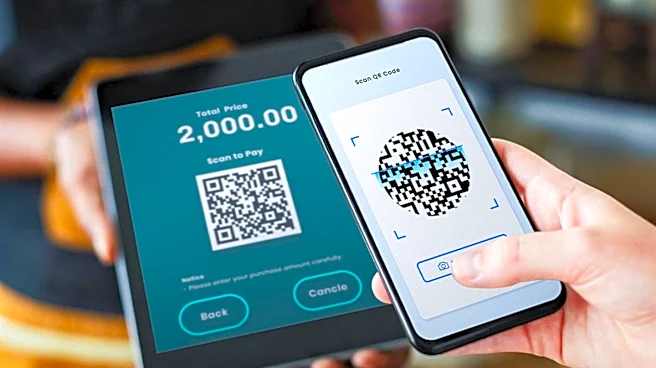
QR code payments, and peer-to-peer services. The process typically involves a customer initiating payment, a merchant requesting it, and a payment gateway securely transferring information to a payment processor. The customer's bank then authorizes the payment, a payment network facilitates communication, and funds are settled with the merchant. This shift is driven by the widespread adoption of smartphones, mobile banking, e-commerce, and contactless technology, making digital payments increasingly accessible for both consumers and businesses across personal, commercial, and daily financial activities. Mobile wallets, for instance, are evolving beyond basic payment functions to include tickets, loyalty programs, and identity credentials.
Why It's Important?
The widespread adoption of digital payments holds significant importance for the U.S. economy and its citizens. For consumers, it offers unparalleled convenience and speed, allowing transactions to be completed within seconds using smartphones, computers, or cards, eliminating the need to carry physical cash. This ease of use can streamline daily activities and enhance the overall shopping experience. For businesses, digital payment systems improve operational efficiency by simplifying checkout processes, automating payment records, and managing invoices more effectively. This can lead to reduced administrative work associated with cash transactions and enable online stores to reach a broader customer base. The growth of e-commerce is particularly intertwined with digital payments, as consumers expect convenient and secure online checkout experiences. Businesses that offer diverse and efficient payment options are better positioned to succeed in the digital marketplace, as complicated checkout processes can deter online purchases.
What's Next?
The digital payments industry in the U.S. is poised for continued evolution, with several key trends shaping its future. Real-time payment systems are expected to become more prevalent, enabling faster money transfers between accounts compared to traditional methods. Artificial intelligence (AI) will play an increasingly crucial role, enhancing fraud detection, transaction monitoring, customer support, and financial analysis. Embedded payments are also anticipated to become more common, allowing users to complete transactions seamlessly within various software platforms and digital experiences. Furthermore, mobile wallets are projected to expand their functionalities beyond basic payments, potentially incorporating features like tickets, loyalty programs, and identity-related credentials. The ongoing development of open banking and real-time payment infrastructure will likely create new opportunities for innovative financial products and services, further integrating digital payments into everyday financial and commercial activities.
Beyond the Headlines
Beyond the immediate benefits of convenience and efficiency, the proliferation of digital payments in the U.S. raises deeper implications concerning cybersecurity, privacy, and accessibility. While payment providers employ advanced security measures like encryption, tokenization, and multi-factor authentication, the risk of cybercrime, including phishing, malware, and fraud, remains a significant concern. Consumers must adopt robust security practices to protect their financial information. The extensive data generated by digital transactions also brings privacy considerations, as these records can reveal detailed insights into purchasing habits and financial activities. This necessitates responsible data-handling practices from businesses and payment providers. Moreover, technical reliability is crucial; internet outages or system errors can disrupt transactions, highlighting the need for robust infrastructure. Ensuring digital accessibility for all segments of the population, including those who may be less tech-savvy or lack access to necessary devices, will be an ongoing challenge as the financial landscape becomes increasingly digital.