




What's Happening?
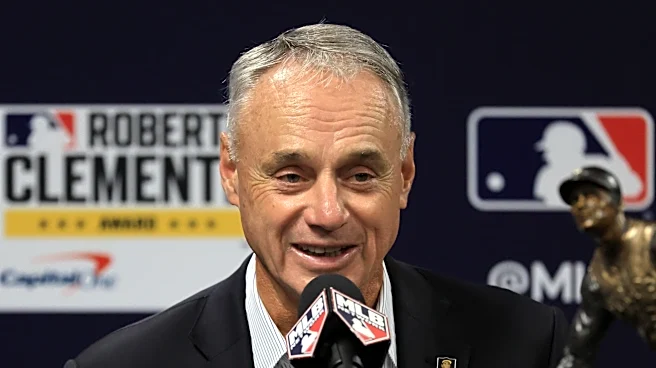
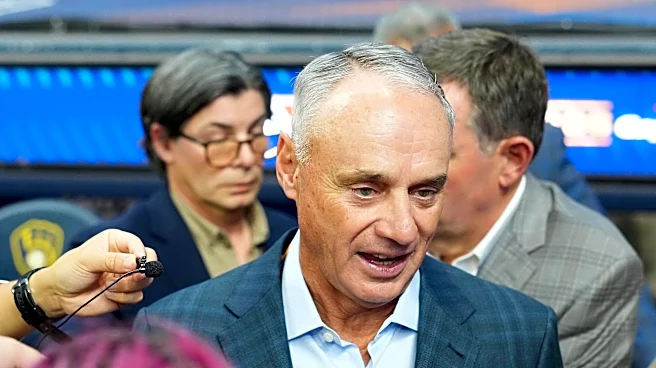
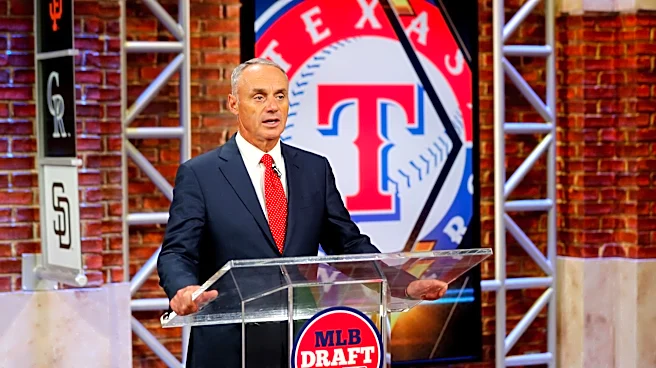
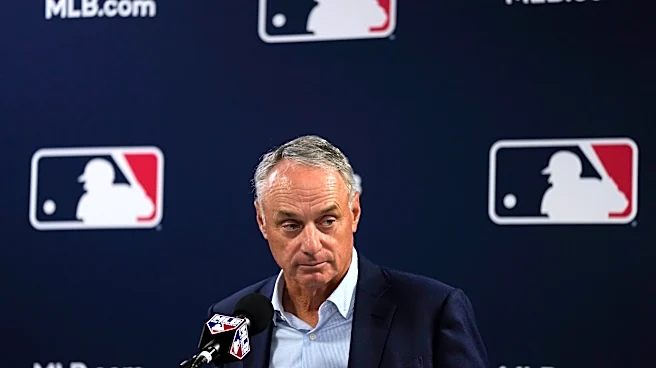
Major League Baseball Commissioner Rob Manfred announced that team owners will not compromise on their demand for a salary cap, setting the stage for a potential lockout starting December 2 that could jeopardize the 2027 season. Speaking at an owners meeting,
Manfred stated that owners would not ratify a deal without both a salary cap and floor. This stance directly conflicts with the players' union, which has consistently rejected a salary cap, citing a similar dispute in 1994 that led to a 7 1/2-month strike and the cancellation of the World Series. MLB has proposed a hard cap of $258.2 million and a floor of $180.2 million for 2028, along with a 50-50 revenue split.
Why It's Important?
This uncompromising position from MLB owners signals a significant labor dispute that could have severe repercussions for the sport. A lockout would halt all trades and signings, disrupting team preparations and potentially delaying or canceling the 2027 season. The owners argue that a salary cap and floor are necessary to address competitive balance, citing that high-spending teams disproportionately succeed. The players' union, however, views the salary cap as a mechanism to suppress player salaries and strip fundamental rights, including guaranteed contracts. The dispute highlights a fundamental disagreement over economic structure and revenue distribution, impacting player livelihoods, team operations, and fan engagement across the league.
What's Next?
With the current collective bargaining agreement expiring on December 1, a lockout appears imminent unless a last-minute compromise is reached. Commissioner Manfred indicated that a decision on a lockout would be made at the last possible moment, but emphasized the owners' firm stance on the salary cap. The players' union has proposed alternatives, such as a 'competitive integrity tax' and increased minimum salaries, but MLB views these as insufficient. The coming weeks will involve intense negotiations, with both sides under pressure to avoid a prolonged work stoppage. The outcome will determine the financial landscape of MLB for years to come and could significantly alter the competitive dynamics of the sport.
Beyond the Headlines
The ongoing labor dispute in MLB reflects broader tensions between ownership and labor in professional sports, often centered on revenue sharing and player compensation. The owners' push for a salary cap, framed as a solution for competitive balance, also serves to control costs and potentially increase franchise profitability. Conversely, the players' resistance underscores their fight for fair market value and protection of their earning potential. This conflict has ethical and economic dimensions, raising questions about the equitable distribution of wealth generated by a multi-billion dollar industry. A prolonged lockout could erode fan loyalty, impact local economies reliant on baseball, and potentially lead to long-term changes in how professional sports leagues operate their business models.