






What's Happening?
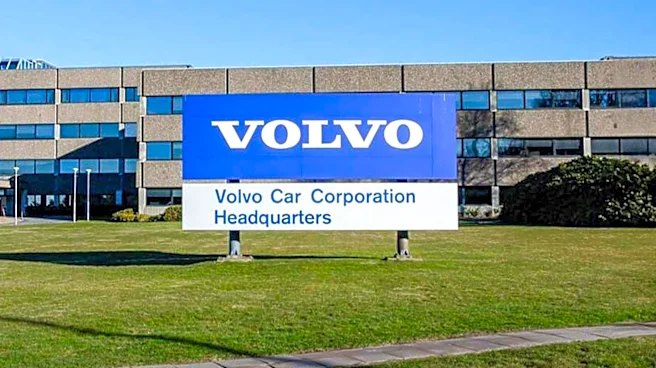
Volvo Cars experienced a 16% drop in global sales during the three-month period ending in October, selling 141,656 vehicles compared to 168,967 in the same period last year. This decline is primarily attributed to difficult market conditions in the U.S.
and China. In the United States, low consumer sentiment and the removal of incentives for electric and plug-in hybrid vehicles negatively impacted sales. Concurrently, China saw increased competition from local manufacturers and a weak macroeconomic environment, which affected demand. Despite the overall sales downturn, fully electric vehicle sales showed a positive trend, growing by 27% and constituting 34% of total sales during this period. However, plug-in hybrid sales decreased by 30%, accounting for 20% of volumes. Combined, electrified models represented 55% of all cars sold.
Why It's Important?
The sales performance of Volvo Cars highlights significant shifts and challenges within the global automotive market, particularly in the U.S. and China. For the U.S. market, the impact of low consumer sentiment and the withdrawal of EV incentives suggests a potential vulnerability in the transition to electric vehicles if government support wanes. This could influence policy discussions around EV adoption and incentives, affecting other automakers and the broader automotive industry. The strong growth in fully electric vehicle sales, despite overall declines, indicates a continued consumer interest in pure EVs, but the drop in plug-in hybrid sales suggests a possible preference for fully electric options or a reevaluation of hybrid value propositions. This trend could prompt U.S. manufacturers and policymakers to focus more intensely on fully electric infrastructure and offerings.
What's Next?
Volvo Cars is adapting its strategy in response to these market conditions. In China, the company is focusing on stabilizing its business rather than aggressively pursuing sales volumes, indicating a more cautious approach in a highly competitive landscape. In Europe, where demand for fully electric models remains strong, particularly for the EX60 with over 50,000 orders, Volvo is working to improve production volumes to meet this demand. The ongoing production ramp-up for models like the EX60 suggests that supply chain and manufacturing capabilities will be critical in determining future sales performance. The company's ability to navigate these regional disparities and production challenges will be key to its recovery and growth in the coming quarters.
Beyond the Headlines
The challenges faced by Volvo Cars in the U.S. and China underscore broader economic and policy-related dynamics. The removal of EV incentives in the U.S. could signal a shift in government support for electric vehicle adoption, potentially placing more burden on manufacturers to innovate and reduce costs to attract consumers. This could lead to increased competition and price adjustments across the EV market. In China, the rise of local manufacturers and a weak macroeconomic environment reflect a maturing and increasingly competitive automotive market, where foreign brands must adapt to local preferences and pricing strategies. These trends highlight the complex interplay between consumer behavior, government policy, and global economic conditions in shaping the future of the automotive industry, particularly in the electric vehicle segment.