



What's Happening?
Filmmaker Paul W.S. Anderson is set to return to the cosmic horror and sci-fi genre by adapting Kevin J. Anderson's novels, 'Nether Station' and 'Nether Vortex'. This move marks a significant return for Anderson to a genre he explored with his 1997 film
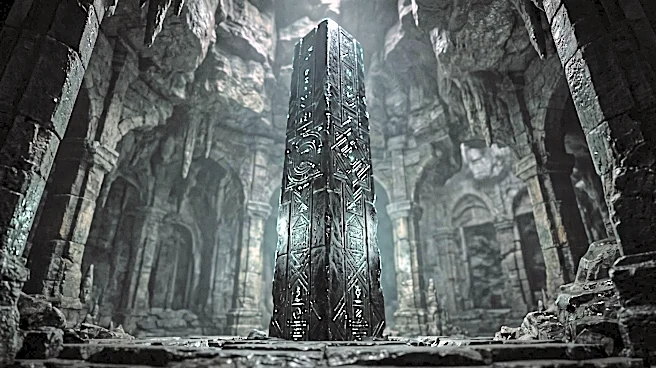
'Event Horizon', which gained a cult following despite initial critical and audience pushback. The new projects will follow Cammie Skoura, a brilliant, neurodivergent young scientist on a deep-space expedition. Skoura uncovers ancient ruins and evidence of long-dead alien civilizations, leading to a profound and unsettling discovery. The character is described as being in the vein of Beth Harmon from 'The Queen's Gambit', anchoring a narrative that blends space exploration with cosmic dread reminiscent of 'Weird Tales' publications. Author Kevin J. Anderson expressed his enthusiasm for Paul W.S. Anderson directing, noting that films like 'Event Horizon' were influential in his writing.
Why It's Important?
This development is significant for fans of cosmic horror and science fiction, as it signals Paul W.S. Anderson's renewed focus on a genre where he has previously made a notable, albeit initially misunderstood, contribution. 'Event Horizon' has garnered a dedicated following over the years, and Anderson's return to similar thematic territory could lead to a resurgence of interest in mind-bending, existential sci-fi horror. For the film industry, this project represents a potential high-profile adaptation of popular novels, which could attract a wide audience interested in complex narratives and visually striking cinematic experiences. The focus on a neurodivergent protagonist like Cammie Skoura also offers an opportunity for diverse representation in leading roles within the sci-fi genre, potentially appealing to a broader demographic and offering fresh perspectives on traditional heroic archetypes. The collaboration between two Andersons, both established in their respective fields, also creates anticipation for a well-executed and faithful adaptation.
What's Next?
Further details regarding the production of 'Nether Station' and 'Nether Vortex' are anticipated, including casting announcements, production timelines, and potential release windows. Given the director's previous experience with 'Event Horizon', there will likely be keen interest in how Paul W.S. Anderson approaches the adaptation to fully realize his vision for cosmic horror, especially considering his past frustrations with studio interference and rushed post-production. The success of these adaptations could also influence future trends in sci-fi horror filmmaking, potentially encouraging more studios to invest in complex, dread-inducing narratives. Audiences will be watching to see if these new films can capture the essence of Kevin J. Anderson's novels and deliver a compelling and terrifying cinematic experience that resonates with both long-time fans of the genre and new viewers.
Beyond the Headlines
The return of Paul W.S. Anderson to cosmic horror with 'Nether Station' and 'Nether Vortex' could signify a broader trend in cinema towards exploring deeper, more philosophical themes within the sci-fi genre. Cosmic horror, with its emphasis on existential dread, incomprehensible entities, and the insignificance of humanity, often delves into profound questions about existence and the unknown. These adaptations have the potential to push the boundaries of visual storytelling and psychological tension, offering audiences more than just jump scares. Furthermore, the portrayal of a neurodivergent protagonist like Cammie Skoura could contribute to evolving representations of intelligence and heroism in mainstream media, challenging traditional archetypes and promoting a more inclusive understanding of human capabilities. The success of these films might also reignite discussions about the artistic integrity of directors and the balance between creative vision and commercial pressures in Hollywood, especially given Anderson's past experiences with 'Event Horizon'.