



What's Happening?
Zhongda Smart has released a detailed guide for individuals and businesses looking to build and operate combo vending machines. The guide emphasizes critical considerations such as selecting the appropriate machine size, integrating preferred payment
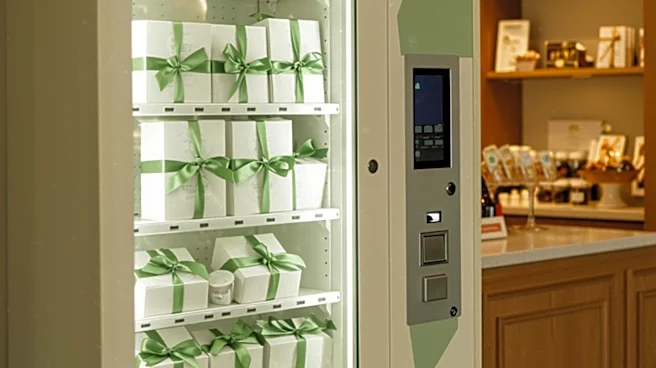
methods, and ensuring reliable dispensing hardware for specific products. It highlights the importance of aligning equipment choices with expected demand and operational efficiency. The company also showcases a specific model, the ZD-L-22, a full-size refrigerated snack and beverage cabinet, detailing its dimensions, touchscreen size, nominal capacity, and connectivity options. The guide advises potential buyers to provide a product list, destination country, proposed installation conditions, and preferred payment options to receive a configuration-specific quotation, rather than relying solely on general product listings. It also covers aspects like evaluating manufacturers, estimating startup expenses, and calculating return on investment, stressing that customization should only be pursued when supported by a clear business case.
Why It's Important?
This guide is important for the U.S. retail and small business sectors as it provides a structured approach to entering or expanding in the vending machine market. By focusing on practical aspects like demand assessment, cost control, and equipment suitability, it helps entrepreneurs make informed decisions, potentially reducing financial risks and improving profitability. The emphasis on understanding unit economics, product mix, and payment system integration can lead to more sustainable vending operations. For U.S. businesses, particularly those in hospitality, offices, or residential complexes, the ability to configure a vending machine to specific needs, such as offering a mix of snacks and beverages with appropriate refrigeration and payment options, can enhance customer satisfaction and revenue generation. The guide's insights into managing inventory, preventing downtime, and utilizing sales data are crucial for optimizing operational efficiency and ensuring long-term success in a competitive market.
What's Next?
Prospective vending machine operators are encouraged to utilize Zhongda Smart's guide to meticulously plan their ventures. The next steps involve a thorough assessment of potential locations, considering factors like customer traffic, purchase motivation, and available alternatives. Buyers should engage with manufacturers like Zhongda Smart by providing detailed product and operational requirements to obtain tailored quotations. This will allow for a comprehensive comparison of equipment, payment modules, and dispensing mechanisms. Furthermore, operators should develop a robust financial model, including startup costs, recurring expenses, and projected revenue, to determine the viability of their investment. The guide also suggests a 90-day plan for new operations, focusing on establishing a baseline, improving assortment and service routines, and making data-driven decisions for potential expansion. This structured approach aims to ensure that vending machine businesses are built on solid operational and financial foundations.
Beyond the Headlines
The detailed guidance from Zhongda Smart extends beyond mere equipment selection, touching upon broader implications for unattended retail. It highlights the evolving landscape of consumer payment preferences, noting the continued relevance of cash alongside digital options, which is a critical insight for businesses serving diverse demographics in the U.S. The guide implicitly addresses the ethical considerations of product quality and safety, particularly for refrigerated items, by emphasizing adherence to food safety requirements and proper temperature monitoring. Moreover, the focus on data-driven decision-making for inventory management and service routes underscores a shift towards more intelligent and responsive retail models. This approach not only optimizes profitability but also enhances customer experience by ensuring product availability and minimizing service disruptions, thereby fostering trust in automated retail solutions. The guide's comprehensive nature suggests a move towards more sophisticated and strategically planned vending operations, moving away from opportunistic placements to data-informed business models.