





What's Happening?
Tony Xu, the CEO of DoorDash, has participated as an angel investor in NavigateAI, a new startup co-founded by Eric Wu of Opendoor. NavigateAI recently secured $25 million in seed funding, valuing the company at $225 million post-money. The startup is
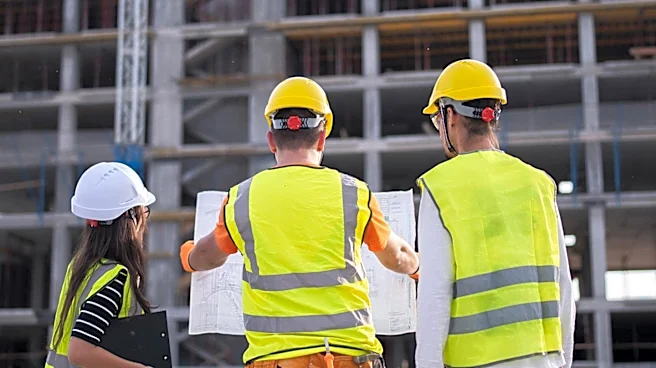
focused on developing AI copilots specifically designed for construction workers. These AI tools are intended to operate hands-free on smartphones and Meta's AI glasses, providing real-time assistance with tasks such as installation accuracy, torque specifications, and building-code compliance. This investment aligns with a broader trend of venture capital flowing into vertical AI agents tailored for specific industries.
Why It's Important?
Tony Xu's investment in NavigateAI signifies a growing interest among prominent tech leaders in applying artificial intelligence to traditional industries like construction. This move highlights the potential for AI to enhance efficiency and safety in sectors that have historically been slower to adopt advanced technology. For the U.S. construction industry, the development of AI copilots could lead to significant improvements in project management, compliance, and overall productivity. It also indicates a shift in investment focus towards specialized AI solutions rather than general-purpose assistants, suggesting a maturation of the AI market. This could create new opportunities for tech companies and skilled labor in the construction sector.
What's Next?
NavigateAI is expected to further develop and deploy its AI copilots, potentially expanding its reach within the U.S. construction market. The involvement of high-profile investors like Tony Xu could attract additional funding and talent, accelerating the company's growth and technological advancements. The success of NavigateAI could also inspire other entrepreneurs and investors to explore AI applications in various niche industries, leading to a wave of innovation. Future developments will likely include pilot programs with construction firms, refinement of the AI's capabilities, and efforts to integrate these tools seamlessly into existing construction workflows. The adoption rate by construction companies will be a key indicator of its impact.
Beyond the Headlines
This investment points to a deeper trend of AI moving beyond consumer applications and into specialized, hands-on professional fields. The ethical and practical implications of AI in construction are significant, including questions of job displacement versus augmentation, data privacy, and the reliability of AI in critical safety scenarios. The integration of AI into construction could redefine skill sets required for workers, emphasizing collaboration with intelligent systems. Furthermore, the investment by a delivery service CEO in a construction AI startup illustrates the cross-industry influence and interconnectedness of technological innovation, potentially leading to unexpected synergies and new business models in the future.