



What's Happening?
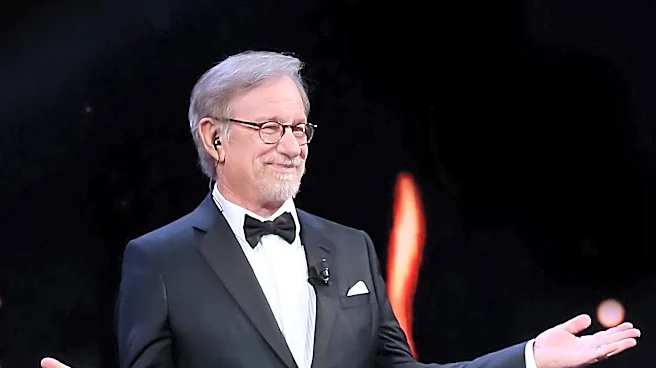
Steven Spielberg's 1993 historical drama 'Schindler's List' remains a powerful cinematic portrayal of the Holocaust. The film, based on the true story of German businessman Oskar Schindler, depicts his transformation from an opportunistic Nazi Party member
to a rescuer of approximately 1,200 Polish Jews during World War II. Shot predominantly in black and white to evoke a documentary feel, the movie highlights Schindler's efforts to employ Jews in his factories, shielding them from extermination camps. The film, starring Liam Neeson as Schindler, Ben Kingsley as Itzhak Stern, and Ralph Fiennes as Amon Göth, won seven Academy Awards, including Best Picture and Best Director.
Why It's Important?
The film's importance lies in its profound humanistic message and its role in Holocaust remembrance. By focusing on Oskar Schindler's moral awakening, it illustrates the capacity for individual courage and empathy even amidst unimaginable atrocities. The use of black and white, with the poignant exception of the 'girl in the red coat,' serves to underscore the stark reality of the period and the singular tragedy of the Holocaust. Beyond its artistic merit, the film's profits were instrumental in establishing the USC Shoah Foundation, which has collected tens of thousands of video testimonies from Holocaust survivors, ensuring that their stories are preserved for future generations. This initiative underscores the film's lasting legacy as a catalyst for historical documentation and education.
What's Next?
As a cornerstone of Holocaust education, 'Schindler's List' will continue to be screened in educational settings and memorial events worldwide. Its themes of moral responsibility, the dangers of indifference, and the power of individual action remain critically relevant. The USC Shoah Foundation, born from the film's success, continues its vital work of collecting and preserving testimonies from survivors of various genocides, ensuring that the lessons of history are not forgotten. Future generations will likely continue to engage with the film as a primary cultural text for understanding the Holocaust and its enduring impact on humanity.
Beyond the Headlines
Beyond its historical narrative, 'Schindler's List' delves into complex ethical and philosophical questions. It explores the nature of good and evil, the ambiguity of human motivation, and the profound impact of individual choices during times of crisis. The film challenges viewers to confront the 'banality of evil' through characters like Amon Göth, while simultaneously celebrating the extraordinary acts of compassion. The Talmudic quote, 'Whoever saves one life saves the world entire,' engraved on a ring given to Schindler, encapsulates the film's core moral dimension, suggesting that every individual act of kindness holds immense significance. This enduring message transcends the specific historical context, offering universal insights into human nature and the imperative to act against injustice.