



What's Happening?
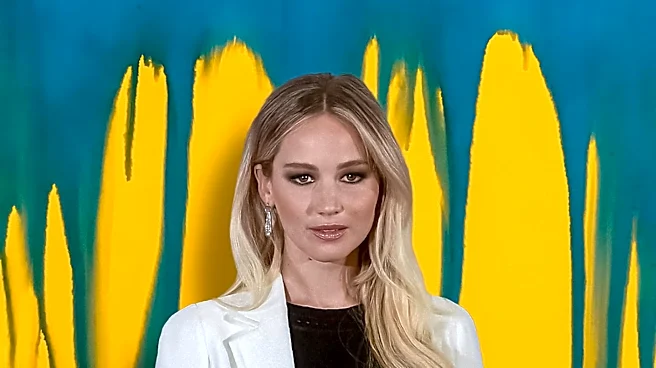
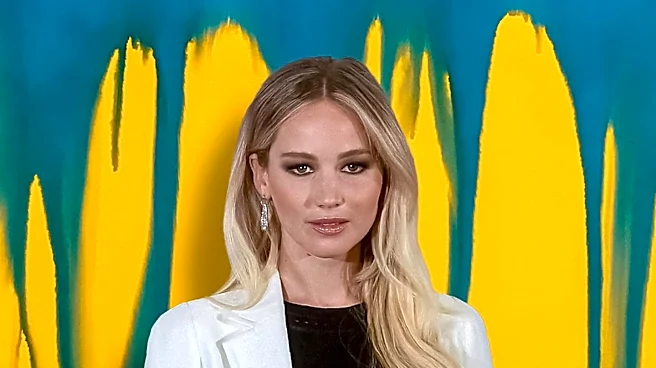
Actress Jennifer Lawrence is currently facing widespread online speculation regarding changes to her appearance following the release of new campaign photos for her haircare brand, Mes° Beauty, launched on October 27. The images, which also appeared in a photoshoot
for The Cut, have led many social media users to question if she has undergone plastic surgery. A beauty writer, Jessica DeFino, commented on Lawrence's 'completely blank' facial expression and 'dead' eyes in the photos, suggesting it aligns with a 'cyborgian, expressionless Beauty standard.' This discussion has expanded beyond creative direction, with plastic surgeon Dr. Melinda Lacerna Kimbrell noting possible differences around Lawrence's eyes consistent with procedures like an upper blepharoplasty or a brow lift. Megyn Kelly also previously addressed Lawrence's changing look on her podcast, comparing the speculation to that surrounding Renée Zellweger's appearance.
Why It's Important?
This event highlights the intense public scrutiny faced by celebrities, particularly women, regarding their physical appearance and the pervasive nature of plastic surgery speculation in popular culture. The immediate and widespread online discussion underscores how social media amplifies such conversations, often leading to rapid judgments and amateur diagnoses. For the beauty industry, it reveals the pressure on public figures to conform to evolving aesthetic standards, even as they launch products promoting self-expression. The involvement of medical professionals in analyzing celebrity photos also blurs the lines between public interest and private medical information, raising questions about ethical boundaries in media reporting on personal health and appearance.
Beyond the Headlines
The speculation surrounding Jennifer Lawrence's appearance touches upon broader societal issues concerning beauty standards, the impact of digital media, and the objectification of women in the public eye. The concept of a 'cyborgian, expressionless Beauty standard' mentioned by a beauty writer suggests a growing trend towards an idealized, often unattainable, and potentially artificial aesthetic. This development can contribute to body image issues and self-esteem challenges among the general public, particularly young women, who are constantly exposed to digitally altered or surgically enhanced celebrity images. Furthermore, the rapid spread of such speculation, often fueled by AI-generated content and unverified claims, underscores the challenges of discerning truth from rumor in the digital age and the potential for online discourse to impact individuals' reputations and mental well-being.