






What's Happening?
The Nano Banana Pro AI image generator is highlighted for its advanced capabilities in creating realistic art and its utility in various design fields, including architecture and interior design. The platform allows users to specify detailed creative
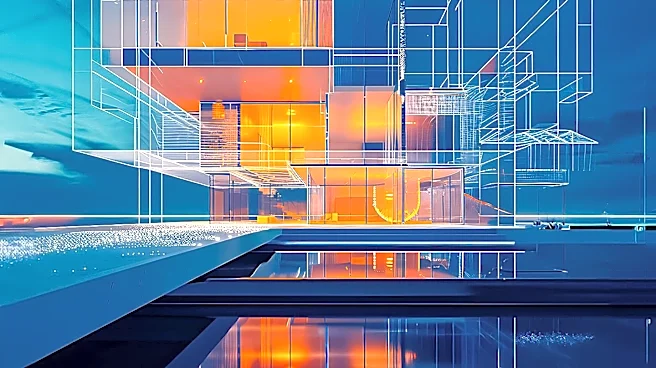
concepts, focusing on subject, composition, action, location, and artistic style. For instance, users can request styles such as ukiyo-e woodblock prints, vaporwave art, claymation textures, or 1980s sci-fi movie posters. The tool also supports image editing and restoration, enabling users to modify existing images by changing backgrounds, adding elements, or removing objects. In architecture and interior design, Nano Banana Pro facilitates early-stage visualization, design iteration, and virtual home staging, innovating the design of spaces.
Why It's Important?
Nano Banana Pro's capabilities are significant for U.S. industries, particularly in creative fields and design. Its ability to generate highly specific artistic styles and realistic imagery can streamline the design process for architects, interior designers, and marketing professionals. By offering tools for early-stage visualization and design iteration, the AI can reduce the time and cost associated with traditional design methods, allowing for quicker prototyping and client feedback. This technology empowers designers to explore a wider range of aesthetic possibilities, from retro vaporwave to modern realism, enhancing creativity and efficiency. The platform's potential for virtual home staging also offers a cost-effective solution for real estate and retail sectors, improving how properties and products are presented to consumers.
What's Next?
The continued development and adoption of AI image generators like Nano Banana Pro are expected to further transform creative and design industries. We may see increased integration of such AI tools into standard design software, making advanced visualization and style exploration more accessible to a broader range of professionals. This could lead to new educational programs focusing on AI-assisted design and a shift in industry standards for visual content creation. As AI models become more sophisticated, they could also enable more personalized and interactive design experiences for consumers, allowing them to co-create spaces or products with AI assistance. The ethical implications of AI-generated art and design, including intellectual property and originality, will likely become a more prominent discussion point.
Beyond the Headlines
Beyond its immediate applications, Nano Banana Pro represents a broader trend in artificial intelligence democratizing creative processes. By providing powerful tools for artistic expression and design, AI can lower the barrier to entry for aspiring artists and designers, fostering innovation across various sectors. However, this also raises questions about the future role of human creativity and the potential for AI to either augment or displace traditional artistic skills. The ability to generate diverse artistic styles, including niche aesthetics like vaporwave, highlights AI's capacity to understand and replicate complex cultural and artistic movements, potentially influencing the evolution of art itself. This technology could lead to new forms of artistic collaboration between humans and AI, pushing the boundaries of what is considered art and design.