
What's Happening?
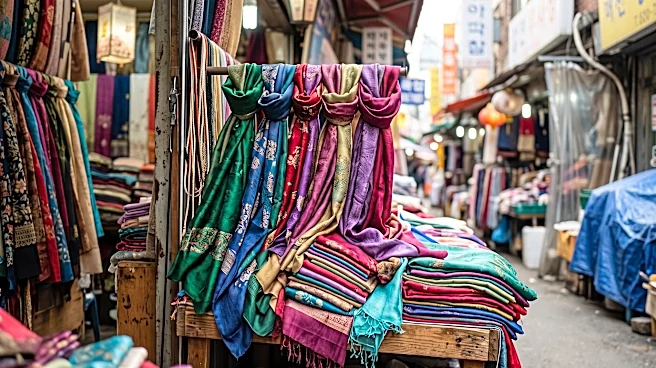
A scarf seller in Seoul's Namdaemun market has become a national sensation, attracting large crowds and media attention due to his unique sales technique. Known by nicknames such as 'scarf ajeossi' (scarf
uncle) and 'Scarfrio,' he engages customers with affectionate bluntness, sometimes playfully discouraging purchases, which has resonated widely on social media. His stall, offering scarves at approximately $1.15 each, now sees queues of people, often middle-aged women, waiting for over an hour, with private security and police sometimes needed to manage the crowds. This unexpected fame has led to him opening Instagram and YouTube accounts, where clips of his interactions have garnered millions of views. The phenomenon has transformed a section of Namdaemun, South Korea’s oldest and largest traditional market, into a bustling attraction, drawing both local visitors and livestreamers.
Why It's Important?
The scarf seller's viral popularity highlights the significant influence of social media in shaping consumer behavior and local economies. His unconventional approach to sales, which prioritizes engaging banter over aggressive selling, has created a unique customer experience that transcends typical market transactions. This phenomenon demonstrates how individual charisma, amplified by digital platforms, can generate substantial public interest and foot traffic, even for a simple product like scarves. While it has brought renewed attention to Namdaemun market, it also presents challenges, as increased crowds can disrupt other vendors. The seller's ability to turn a mundane retail job into a form of entertainment underscores a shift in consumer engagement, where personality and narrative can be as compelling as the product itself, potentially inspiring other small businesses to explore creative marketing strategies.
What's Next?
The scarf seller's continued popularity suggests that his unique sales approach will likely remain a significant draw for Namdaemun market. However, the growing crowds have already led to operational adjustments, including the hiring of private security and the seller occasionally ceasing to announce his opening hours. While some neighboring vendors, like a shoe seller, express frustration over blocked shopfronts and disrupted business, others acknowledge the overall positive impact on market foot traffic. The seller himself has expressed feeling 'enormous pressure and anxiety' due to the attention and has apologized to nearby traders. Moving forward, managing the balance between his viral fame and the practicalities of market operations will be crucial. The situation may prompt market authorities to consider strategies for crowd management and equitable distribution of benefits among vendors, as the market adapts to this new form of celebrity-driven commerce.
Beyond the Headlines
Beyond the immediate commercial impact, the 'Scarfrio' phenomenon reflects deeper cultural and social trends in South Korea. His appeal, described by customers as feeling like a 'son' or 'younger brother,' taps into a desire for authentic, personable interactions in an increasingly digital and often impersonal world. The blunt yet affectionate communication style resonates with a segment of the population, particularly older generations, who appreciate directness and humor. This viral success also highlights the power of 'soft' influence, where charm and personality can generate significant economic activity without traditional advertising. It underscores a broader societal appreciation for individuals who break from conventional norms and create unique experiences, suggesting a cultural shift towards valuing genuine human connection and entertainment in everyday transactions. The story also subtly touches on the globalized nature of commerce, with the scarves themselves being made in China, yet gaining local fame through a distinctly Korean interaction.