







What's Happening?
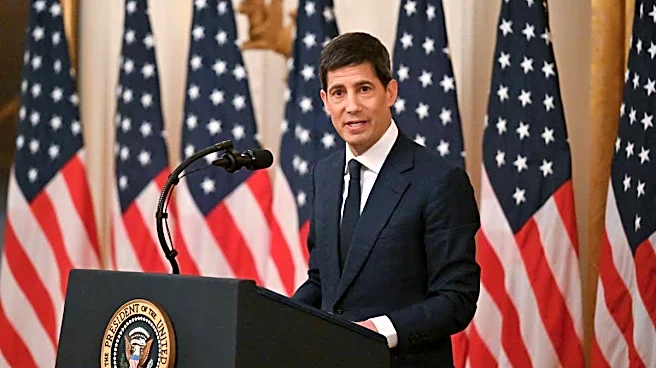
Kevin Warsh, recently appointed as the Federal Reserve Chair by President Trump, is set to lead his first policy meeting. The meeting comes at a time when inflation has reached a three-year high of 4.2%, largely driven by increased gas prices. Warsh's
approach to interest rates is under scrutiny, as he balances the need to control inflation with the economic growth objectives. The Federal Open Market Committee (FOMC) is expected to maintain the current interest rate of 3.6%, but Warsh's stance on future rate adjustments remains uncertain. His leadership style is anticipated to differ from his predecessor, Jerome Powell, with a focus on less public commentary and more internal debate.
Why It's Important?
Warsh's decisions will have significant implications for the U.S. economy, particularly in managing inflation and interest rates. His approach could influence borrowing costs for consumers and businesses, affecting economic growth. The financial markets are closely watching for any signals of a shift in monetary policy, which could impact stock market valuations and investor confidence. Warsh's leadership will also test the Federal Reserve's independence, especially given President Trump's previous demands for rate cuts. The outcome of this meeting could set the tone for Warsh's tenure and the Fed's policy direction.
What's Next?
The Federal Reserve is expected to release its quarterly economic projections, which will provide insights into future interest rate changes. Warsh's participation in these projections will be closely monitored, as it may indicate his policy preferences. The Fed's communication strategy and its impact on financial markets will be a key focus, with potential adjustments to forward guidance. Warsh's ability to build consensus within the FOMC and manage external pressures from the White House will be critical in shaping the Fed's policy framework.