





What's Happening?
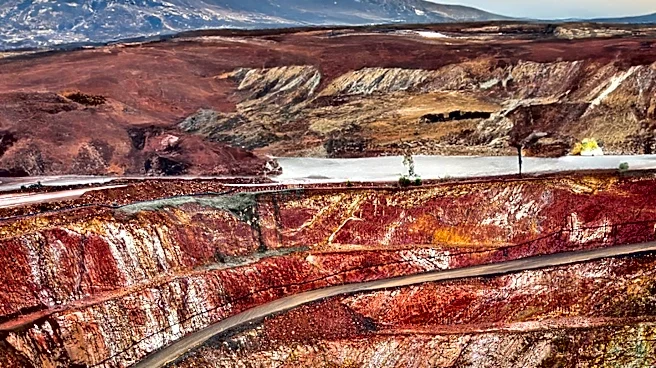
TSX-V-listed Koryx Copper has announced the assay results from 18 drill holes, totaling 7,074 meters, as part of its ongoing infill and expansion drill program at the wholly-owned Haib copper project in southern Namibia. The Haib project is identified
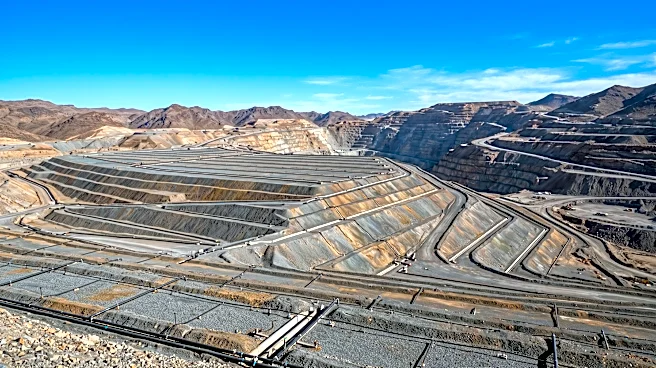
as a massive, disseminated porphyry copper/molybdenum/gold deposit, with plans to produce copper and molybdenum concentrate through large-scale open-pit mining, conventional sulfide milling, and flotation. Koryx CEO and president Heye Duan noted that the results consistently show wide intercepts across the Haib deposit, including notably higher-grade zones near the surface, particularly within Target Area 3, where the mine plan is scheduled to commence. The infill and expansion drilling program is now complete.
Why It's Important?
While the Haib copper project is located in Namibia, its development holds indirect importance for the U.S. economy and strategic mineral supply. Copper is a critical component in various U.S. industries, including construction, electronics, and renewable energy infrastructure, particularly for electric vehicles and grid modernization. A new, significant source of copper and molybdenum, even from an international location, can contribute to global supply stability, potentially mitigating price volatility and ensuring availability for U.S. manufacturers. The project's scale and the consistent high-grade intercepts suggest it could become a substantial producer, influencing global commodity markets. For U.S. companies reliant on these metals, a diversified and robust global supply chain, supported by projects like Haib, is crucial for maintaining production and managing costs, especially as demand for these materials is projected to increase with the global energy transition.
What's Next?
With the infill and expansion drilling program now concluded, Koryx Copper's technical team is focusing on completing the geological modeling and estimation work. This work is essential for updating the mineral resource estimate and finalizing the prefeasibility study for the Haib project. Both the updated mineral resource estimate and the prefeasibility study are anticipated to be published before the end of 2026. The completion of these studies will provide a clearer picture of the project's economic viability, reserves, and operational plan, which will be critical for attracting further investment and moving towards the development phase. The results will also inform potential partners and stakeholders about the project's scale and potential returns, paving the way for future financing and construction decisions.
Beyond the Headlines
The development of large-scale mining projects like Haib in Namibia underscores the global competition and strategic importance of critical minerals. As the U.S. and other developed nations seek to secure their supply chains for materials essential to advanced technologies and green energy, projects in diverse geographical locations become increasingly relevant. The environmental and social governance (ESG) aspects of such large-scale mining operations are also a growing concern. Future developments at Haib will likely be scrutinized for their adherence to international best practices in environmental protection, community engagement, and labor standards. The success of this project could also influence investment trends in African mining, potentially drawing more U.S. and international capital into the continent's resource sector, while also raising questions about responsible resource extraction and benefit-sharing with local communities and governments.