





What's Happening?
Lindian Resources, an ASX-listed company, is developing a cross-border rare-earth supply chain that will connect its Kangankunde project in Malawi with an established processing facility in Kazakhstan. The company anticipates its Kangankunde mine to produce
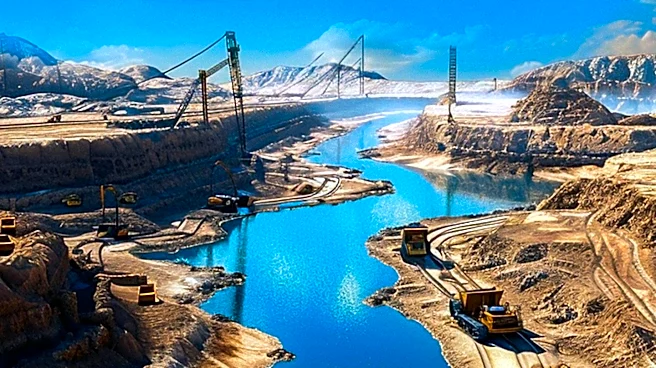
approximately 12,500 tonnes of monazite concentrate annually. Lindian's acquisition of a 51% stake in the Stepnogorsk processing facility in Kazakhstan, for approximately $15 million, is a strategic move to process this material into mixed rare-earth carbonate, reducing reliance on external processors. The Stepnogorsk plant, originally developed through Japanese-Kazakh cooperation, offers existing infrastructure, including access to power, water, reagents, and skilled labor, which could accelerate the development timeline for Lindian's downstream processing capabilities. The Kangankunde project is notable for its relatively low levels of uranium and thorium, which can simplify material handling and reduce waste-storage costs.
Why It's Important?
This initiative is significant for the U.S. and global critical minerals landscape as it contributes to diversifying the rare-earth supply chain away from its current concentration in China. By establishing a processing route outside of China, Lindian Resources aims to provide an alternative source of neodymium-praseodymium (NdPr) materials, which are crucial for permanent magnets used in electric vehicles, wind turbines, and defense technologies. European manufacturers, in particular, are actively seeking to reduce their dependence on Chinese-dominated rare-earth production. This cross-jurisdictional supply chain, combining an African mining operation with a Central Asian processing facility, offers a potential pathway for processed rare-earth material to reach markets seeking secure and diversified sources, thereby enhancing supply chain resilience for critical technologies.
What's Next?
Investors will closely monitor several key milestones for Lindian Resources. These include the construction progress at the Kangankunde mine, the refurbishment of the Stepnogorsk processing facility, and the establishment of efficient logistics for transporting concentrate between Malawi and Kazakhstan. A critical aspect will be demonstrating the existing processing facility's ability to consistently produce a commercial-grade rare-earth product. Lindian also maintains an offtake relationship with Australian mineral-sands producer Iluka Resources, providing additional commercial flexibility. If the mining and processing components are successfully integrated, Lindian aims to transition from a rare-earth concentrate developer to a supplier of processed critical mineral material, capturing greater downstream value. The project will also need to adhere to Malawian environmental and export regulations, ensuring compliance with mining, processing, and transportation requirements.
Beyond the Headlines
The development of this cross-border supply chain underscores the increasing global effort to de-risk critical mineral dependencies and build more robust, geographically diverse supply networks. The strategic acquisition of an existing processing facility in Kazakhstan highlights a trend towards leveraging established infrastructure to accelerate downstream capabilities, rather than building entirely new facilities, which can be capital-intensive and time-consuming. The lower radioactive content of Kangankunde's mineralization could also set a precedent for more environmentally conscious rare-earth extraction, potentially influencing future industry standards. This project represents a tangible step towards creating a more distributed and resilient global supply of rare earths, which is crucial for the ongoing energy transition and technological advancements in the U.S. and allied nations.