






What's Happening?
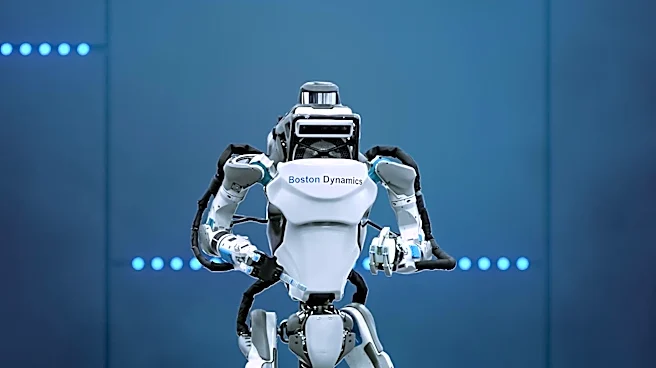
Boston Dynamics is organizing a webinar to address the critical aspects of human-machine interaction (HMI) as humanoid robots transition from labs to real-world industrial and commercial settings. The event, titled 'The Art Behind Human-Robot Interaction,'
will feature insights from Mario Bollini, director of human-robot interaction, and Leland Hepler, a UI designer with a background in animation. The focus will be on making robots predictable rather than human-like to foster trust and safety. The webinar will cover topics such as communicating intent through anticipatory cues, the autonomous operation of the Atlas robot without safety cages, and the role of large language models in enabling more natural interactions. The event is scheduled for July 22, 2026, at 11:00 a.m. ET.
Why It's Important?
The integration of humanoid robots into everyday environments poses significant challenges and opportunities. By focusing on predictability and safety, Boston Dynamics aims to enhance human-robot collaboration, which is crucial for industries looking to automate tasks while ensuring worker safety. The shift towards using large language models for more natural interactions represents a significant advancement in robotics, potentially increasing efficiency and reducing the need for human intervention. This development could lead to broader acceptance and deployment of robots in various sectors, impacting labor markets and operational strategies.
What's Next?
Following the webinar, Boston Dynamics may continue to refine its approach to human-robot interaction based on feedback and emerging technologies. Industries adopting these robots will likely monitor the outcomes closely, assessing the impact on productivity and safety. Regulatory bodies might also take interest in the safety protocols discussed, potentially influencing future guidelines for robotic integration in workplaces. The ongoing evolution of AI and robotics will likely spur further innovations and discussions on ethical and practical implications.
Beyond the Headlines
The discussion on human-robot interaction touches on deeper ethical and cultural dimensions, such as the 'uncanny valley' phenomenon, where robots that closely mimic human appearance can cause discomfort. By embracing mechanical forms, Boston Dynamics seeks to overcome this challenge, promoting a cultural shift in how society perceives and interacts with robots. This approach could redefine the aesthetic and functional design of future robots, influencing both consumer acceptance and industry standards.