







What's Happening?
Soros Fund Management, led by George Soros, has listed the 140,000-square-foot Argonaut building located on Billionaires' Row in New York City for approximately $100 million. The offering memo from Newmark, the real estate firm handling the sale, explicitly
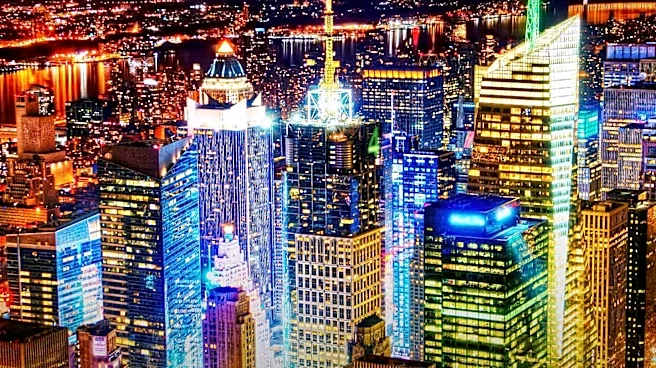
pitches the 1909 building as a prime candidate for conversion into "best-in-class residences." This move comes amidst a broader trend in Manhattan where owners of older office buildings are increasingly looking towards residential conversions due to lingering office vacancy risks, despite the office leasing market being at its healthiest since the pandemic. The Argonaut building is situated at Broadway and West 57th Street, a submarket described as supply-constrained for residential properties. This sale effort by Soros Fund Management highlights the growing momentum behind office-to-residential transformations in New York City.
Why It's Important?
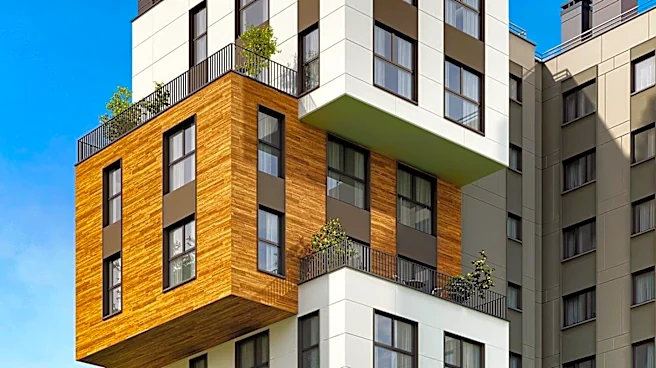
The listing of the Argonaut building by Soros Fund Management for residential conversion underscores a significant shift in New York City's real estate landscape, driven by evolving market demands and economic pressures. The push for office-to-residential conversions is crucial for addressing the city's dire need for additional housing, as highlighted by Northwind Group's Ran Eliasaf. This trend can help revitalize older commercial properties that may no longer be competitive in the current office market, transforming them into much-needed residential units. For developers and investors, these conversions represent a strategic opportunity to capitalize on housing shortages and potentially higher returns compared to traditional office spaces. Conversely, it signifies a challenge for the traditional office market, as older buildings struggle to attract tenants, pushing owners to seek alternative uses. The success of such high-profile conversions could set a precedent, encouraging more property owners to explore similar strategies, thereby reshaping urban planning and housing availability in major U.S. cities.
What's Next?
The sale of the Argonaut building will likely serve as a bellwether for future office-to-residential conversions in New York City. If the sale proceeds as planned and the building is successfully transformed into residences, it could further validate the financial viability and market demand for such projects. Potential buyers will need to navigate the complexities of converting a historic office building into modern residential units, including securing financing, obtaining necessary permits, and managing construction. The evolving financing tools, such as the recent C-PACE financing overhaul in New York, which allows for larger loans on qualifying retrofit and conversion projects, will play a critical role in facilitating these deals. The outcome of this sale could influence other property owners in supply-constrained submarkets to consider similar repositioning strategies for their older office stock, potentially leading to a more widespread transformation of the city's commercial real estate inventory into residential spaces.
Beyond the Headlines
The trend of office-to-residential conversions, exemplified by Soros Fund Management's move, carries deeper implications for urban development and societal well-being. Beyond merely addressing housing shortages, these conversions can contribute to creating more vibrant, mixed-use urban environments. By bringing residents into previously commercial-only districts, they can foster round-the-clock activity, support local businesses, and enhance neighborhood safety and vitality. However, there are also challenges, such as ensuring that new residential units include affordable housing components to prevent exacerbating gentrification and displacement. The adaptive reuse of existing structures also aligns with sustainability goals by reducing the need for new construction and minimizing environmental impact. This shift reflects a broader re-evaluation of urban spaces in the post-pandemic era, where the traditional office model is being rethought, and cities are seeking innovative solutions to optimize their built environment for diverse community needs.