





What's Happening?
Ghana, the world's second-largest cocoa producer, has announced an expected 16% decline in cocoa production for the 2026/2027 season. This forecast, released by the Ghana Cocoa Board (COCOBOD), attributes the decline to El Niño weather conditions, excessive
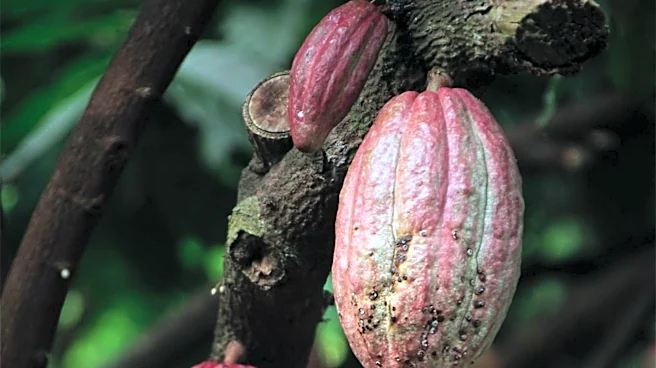
rainfall, disease, and illegal mining activities. The Western and Western North regions, which are crucial to national production, are particularly affected by the Cocoa Swollen Shoot Virus Disease and aging farms. COCOBOD is taking measures to address the crisis, including farm rehabilitation, increased pesticide use, and reintroducing free fertilizer distribution.
Why It's Important?
The anticipated drop in cocoa production could have significant implications for global chocolate prices, affecting both consumers and the confectionery industry. As Ghana is a major supplier, any reduction in output can lead to supply shortages and price increases. This situation underscores the vulnerability of agricultural sectors to climate change and environmental challenges. The economic impact extends beyond Ghana, potentially affecting international trade and market stability. Stakeholders, including chocolate manufacturers and retailers, may need to adjust their strategies in response to these developments.
What's Next?
COCOBOD's efforts to mitigate the production decline will be closely watched. The success of farm rehabilitation and pest control measures will be critical in stabilizing future cocoa yields. Additionally, international cooperation among cocoa-producing countries may be necessary to address broader market challenges. The situation may prompt discussions on sustainable agricultural practices and climate resilience. Monitoring the response from global markets and industry players will provide insights into the long-term effects on the chocolate supply chain.