

What's Happening?
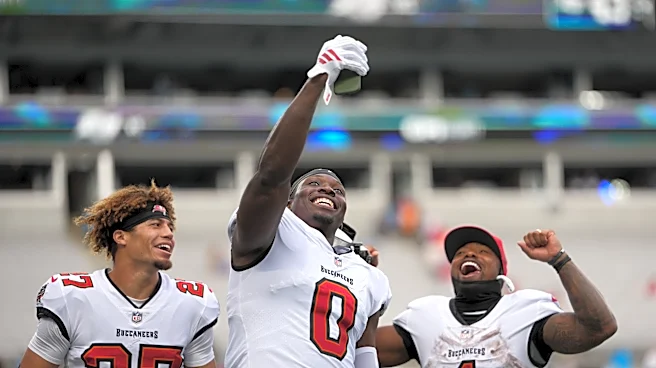
Tampa Bay Buccaneers defensive tackle Calijah Kancey has attributed the team's recent surge in sacks to the strong performance of the defensive secondary. In the last two games, the Buccaneers have recorded 10 sacks, a significant improvement. Kancey echoed
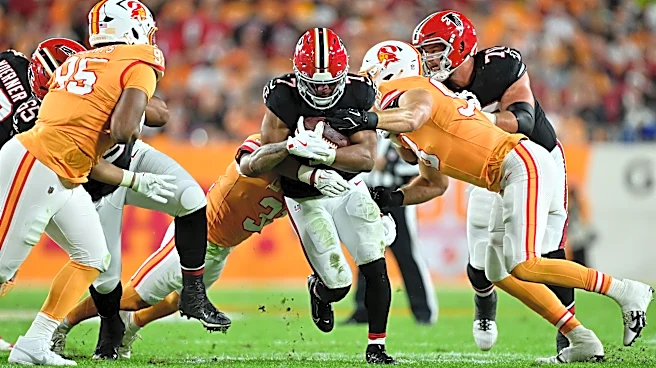
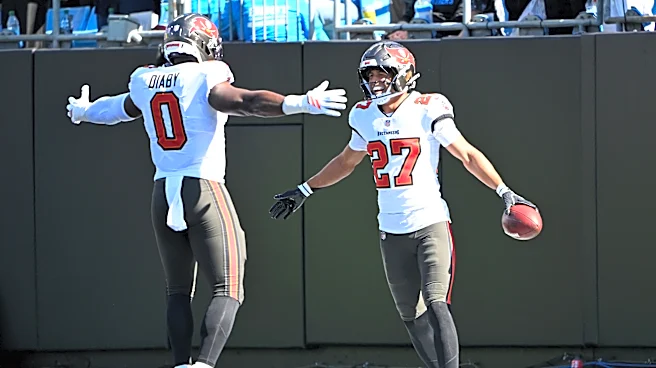
comments made by Bucs coach Todd Bowles, who suggested that the secondary's ability to cover receivers effectively forces opposing quarterbacks to hold onto the ball longer. This extended holding time provides the defensive front, including Kancey, more opportunities to pressure and sack the quarterback. Kancey specifically praised defensive backs like Zyon McCollum, Jacob Parrish (who leads the NFL in passes defensed with 11), and Tykee Smith, along with the linebackers, for executing their roles and being in the right positions. Kancey himself benefited from this synergy, scoring a 32-yard scoop-and-score touchdown after an Al-Quadin Muhammad sack dislodged the ball from Bryce Young.
Why It's Important?
This development highlights a critical aspect of defensive football: the interdependent relationship between a strong secondary and an effective pass rush. For the Tampa Bay Buccaneers, a team whose coach previously downplayed the importance of sacks, this newfound synergy is crucial for improving overall defensive performance and securing wins. A more effective pass rush can disrupt opposing offenses, force turnovers, and reduce the pressure on the secondary, creating a more balanced and formidable defense. This strategic insight can influence coaching decisions and player development across the NFL, emphasizing the value of a cohesive defensive unit rather than relying solely on individual talent. For fans and analysts, it provides a deeper understanding of how defensive success is achieved through coordinated effort.
What's Next?
The Buccaneers will aim to maintain this defensive synergy in upcoming games. The health and continued strong play of key secondary members like Jacob Parrish and Zyon McCollum will be vital for sustaining the pass rush's effectiveness. Opposing offenses will likely adjust their strategies to counter the Buccaneers' improved pass rush and coverage, potentially leading to more quick passes or different offensive schemes. The coaching staff will need to continue to adapt and ensure the defensive unit remains cohesive and disciplined. If this trend continues, it could significantly impact the Buccaneers' playoff aspirations and overall standing in the league, demonstrating the tangible benefits of a well-integrated defensive strategy.
Beyond the Headlines
The Buccaneers' recent defensive success, driven by the secondary's performance, offers a compelling narrative about strategic adaptation and team dynamics in professional sports. It challenges the conventional wisdom that sacks are solely a product of the defensive line's prowess, instead emphasizing the collective effort of the entire defense. This shift in perspective can influence how teams scout, draft, and develop players, prioritizing versatile defensive backs who can lock down receivers and give pass rushers more time. Furthermore, it underscores the importance of coaching philosophy and how a coach's initial assessment (e.g., downplaying sacks) can evolve based on on-field results and player performance. This dynamic interplay between coaching, player execution, and strategic adjustments is a constant in the competitive landscape of the NFL.