






What's Happening?
Paramount is actively pursuing an extension of Jon Stewart's contract for Comedy Central’s “The Daily Show” beyond its current expiration in December 2026. This interest comes as the company navigates a changing late-night television landscape, including
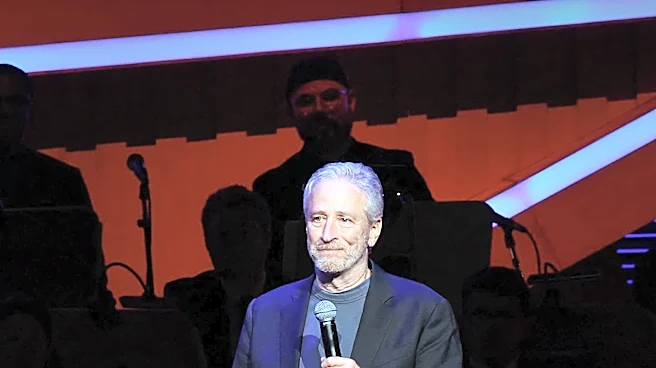
the recent cancellation of CBS’s “The Late Show With Stephen Colbert.” A company insider confirmed Paramount's desire to retain Stewart, who is considered a signature star and a central figure in Comedy Central's strategy, alongside “South Park.” Stewart returned to host “The Daily Show” on Mondays in 2024, nearly nine years after his initial 16-year tenure, and also serves as an executive producer. The show has demonstrated strong performance, achieving its highest-rated second quarter among adults 18-49 since 2017 and its most-watched second quarter among total viewers since 2018, according to Nielsen data provided by Paramount. Additionally, the Tuesday-through-Thursday telecasts, featuring rotating members of the show’s news team and correspondents, have seen a 66% year-over-year increase among adults 18-49.
Why It's Important?
The potential extension of Jon Stewart's contract is significant for Paramount and the broader U.S. television industry, particularly in the late-night comedy genre. Stewart's return has revitalized “The Daily Show,” demonstrating his enduring appeal and ability to attract a substantial audience. His continued presence could solidify Comedy Central's position in a competitive market, especially as other late-night programs face cancellations or declining viewership. For Paramount, securing Stewart is a strategic move to maintain a key asset and leverage his influence to drive ratings and engagement across various platforms. The strong performance metrics, including significant year-over-year growth and Emmy nominations, underscore the show's cultural and commercial value. This decision reflects a broader industry trend where established and popular personalities are crucial for network success, particularly in an era of fragmented viewership and increasing streaming competition. The outcome of these negotiations will likely influence future talent strategies and programming decisions within Paramount and potentially across other media companies.
What's Next?
Negotiations between Jon Stewart and Paramount are ongoing, with his current contract set to expire in December 2026. While Paramount has expressed strong interest in his renewal, an extension has not yet been finalized. The timing of these discussions is not unusual, as Stewart's previous extensions also occurred closer to their expiration dates. The company will likely continue efforts to secure Stewart, given his proven track record and the show's recent success. The future of “The Daily Show” beyond 2026, particularly regarding its format and hosting structure, remains to be seen. Should Stewart extend his contract, it would likely involve continued hosting of Monday night episodes and his role as executive producer. If an agreement is not reached, Paramount would face the challenge of finding a suitable replacement or re-evaluating its late-night strategy for Comedy Central. The evolving media landscape and Paramount's new ownership structure could also play a role in the final outcome.
Beyond the Headlines
Beyond the immediate contractual discussions, Jon Stewart's role at “The Daily Show” highlights a deeper trend in political satire and its impact on public discourse in the U.S. Stewart has historically been a prominent voice in critiquing political figures and media narratives, and his return has reignited discussions about the role of comedy in shaping public opinion, especially during election cycles. His ability to blend humor with incisive commentary offers a unique platform for engaging audiences on complex issues. The emphasis on his 'signature star' status also points to the increasing value of individual personalities in an age where content is abundant but distinctive voices are rare. Furthermore, the success of “The Daily Show” under Stewart, even with a partial hosting schedule, suggests a potential shift in how late-night programming can be structured to maximize impact and talent retention. This could lead to more flexible arrangements for high-profile hosts, allowing them to balance other projects while still contributing to key franchises.