




What's Happening?
For individuals seeking alternatives to tretinoin, particularly in regions where it is less accessible, tazarotene and retinaldehyde are suggested options. Retinaldehyde is noted for its faster action compared to retinol and its mild antibacterial properties,
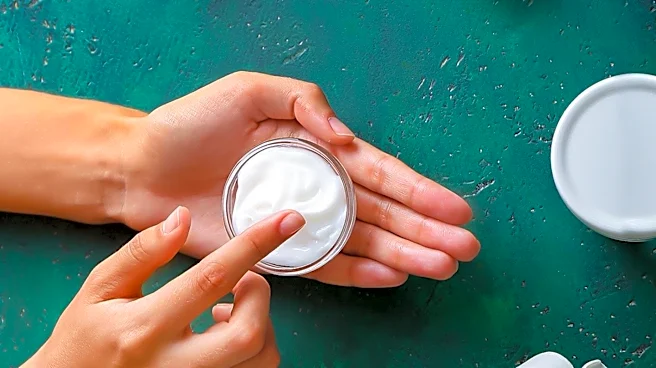
making it beneficial for acne treatment. Additionally, occlusive products such as CeraVe Healing Ointment, First Aid Beauty Ultra Repair Rescue Barrier Balm, and petrolatum-rich ointments are recommended to alleviate skin irritation. The practice of 'slugging,' which involves applying a layer of petroleum jelly or similar occlusive over other skincare products, is also discussed. While some dermatologists advocate for slugging on retinoid nights to mitigate irritation, others advise alternating retinoid and slugging nights. There is no definitive clinical trial to settle this debate, and expert opinions vary. Occlusion can increase the penetration of retinoids, potentially intensifying redness, peeling, and stinging, especially during the initial weeks of use. Therefore, consulting the prescribing clinician before combining occlusives with prescription retinoids is crucial.
Why It's Important?
The discussion around tretinoin alternatives and slugging is significant for consumers and the skincare industry. It highlights the growing demand for effective, accessible skincare solutions and the complexities of product interactions. For consumers, understanding these alternatives and practices can lead to more informed decisions about managing skin conditions like acne and irritation, especially when prescription options are limited or cause adverse reactions. The varying expert opinions on slugging with retinoids underscore the need for personalized skincare advice, emphasizing that what works for one individual may not work for another. This also impacts product development, as companies may focus on creating new retinaldehyde-based products or refining occlusive formulations to cater to these needs. Furthermore, the emphasis on consulting healthcare professionals before combining potent active ingredients with occlusives promotes safer skincare practices, potentially reducing instances of skin damage and adverse reactions. The lack of clinical trials for certain practices like slugging also points to areas where further research is needed to provide clearer guidelines for consumers and professionals.
What's Next?
Consumers are advised to consult with their prescribing clinicians before incorporating occlusive products like petroleum jelly with prescription retinoids such as tretinoin or adapalene. This consultation should cover the order and timing of application to ensure safety and efficacy. The ongoing debate among dermatologists regarding the best approach for combining retinoids and slugging suggests that further research, potentially in the form of clinical trials, may be undertaken to provide clearer, evidence-based guidelines. Skincare brands may continue to innovate in the retinaldehyde and occlusive product categories, driven by consumer interest in tretinoin alternatives and irritation-reducing methods. Educational efforts from dermatologists and skincare experts will likely continue to emphasize personalized skincare routines and the importance of professional guidance, particularly when dealing with potent active ingredients and complex layering techniques.
Beyond the Headlines
The conversation surrounding tretinoin alternatives and slugging extends beyond immediate skincare benefits, touching upon broader themes of consumer education, product regulation, and the influence of social media on health practices. The rise of 'slugging' as a trend, despite a lack of extensive clinical trials, illustrates how social media can rapidly popularize practices based on anecdotal evidence. This phenomenon highlights the ethical responsibility of influencers and brands to provide accurate, evidence-based information. Moreover, the varying availability of prescription retinoids like tretinoin in different countries underscores global disparities in access to dermatological treatments, prompting a search for effective over-the-counter alternatives. The emphasis on occlusives also brings to light the fundamental role of barrier repair in skin health, moving beyond purely active ingredient-focused approaches. This shift encourages a more holistic view of skincare, where protecting and nurturing the skin barrier is as crucial as addressing specific concerns with potent treatments.