





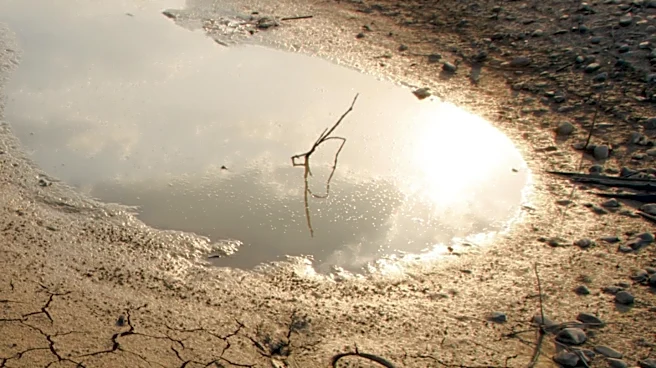

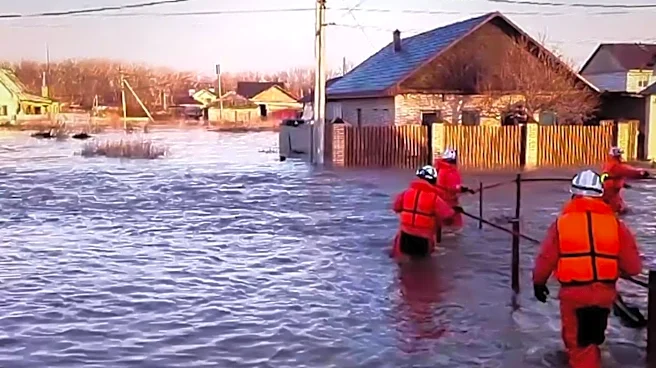
What's Happening?
The mining industry in Southern Africa is grappling with significant water-related challenges, characterized by both scarcity and excess. Despite mining accounting for a low single-digit percentage of national water use, its impact is concentrated in arid
regions like the Northern Cape's iron and manganese fields, the platinum belt, and Namibia's uranium desert. Some mines struggle to secure sufficient water for operations, leading to reliance on solutions such as desalination plants and extensive pipeline networks. Conversely, deep mines often contend with excessive water, requiring continuous pumping to prevent flooding. This dual problem necessitates substantial investment in water infrastructure, including boreholes, treatment plants, and monitoring systems. The industry's water management practices are under increasing scrutiny, particularly concerning acid mine drainage from abandoned workings and the safety of tailings dams, which are now subject to global standards following incidents like the Brumadinho disaster.
Why It's Important?
The water challenges in Southern Africa's mining sector have profound implications for the region's economy, environment, and social stability. The need for extensive water infrastructure, such as desalination and long-distance pipelines, significantly increases operational costs for mining companies, potentially impacting profitability and investment decisions. Environmentally, acid mine drainage poses a long-term threat, contaminating water sources and requiring indefinite treatment, which creates a permanent market for neutralization reagents and monitoring services. Socially, competition for water resources between mines, agriculture, and communities can exacerbate tensions, especially in drought-prone areas. The adoption of stricter tailings management standards, while crucial for safety, also adds compliance burdens and drives demand for new technologies like dry stacking. This situation highlights the critical balance between resource extraction, environmental stewardship, and community well-being, influencing regulatory frameworks and the social license to operate for mining companies.
What's Next?
The Southern African mining industry is expected to continue investing heavily in advanced water management solutions. This includes the development of more efficient recycling systems within mines, increased adoption of desalination technologies for operations in arid zones, and enhanced monitoring of water usage and discharge. Regulatory bodies will likely maintain or increase scrutiny on water licenses and environmental compliance, pushing companies towards greater transparency and accountability in their water stewardship. The ongoing challenge of acid mine drainage will necessitate sustained funding for state treatment stations and the development of innovative, long-term remediation strategies. Furthermore, the emphasis on shared water infrastructure, where mines contribute to municipal water supplies or regional wellfields, is likely to grow as a means of fostering better community relations and ensuring sustainable resource allocation. The market for water-related services and technologies, from hydrogeology studies to advanced treatment plants, is anticipated to expand significantly.
Beyond the Headlines
The water crisis in Southern African mining extends beyond immediate operational and environmental concerns, touching upon deeper ethical and governance issues. The legacy of acid mine drainage from historical operations underscores the long-term environmental liabilities that can outlive a mine's economic lifespan, raising questions about intergenerational equity and corporate responsibility. The competition for water resources in a climate-vulnerable region highlights the intricate link between resource extraction, climate change, and human rights, particularly the right to water. The shift towards stricter global standards for tailings management reflects a broader societal expectation for industries to internalize environmental and social costs, moving beyond mere compliance to proactive risk mitigation. This situation also prompts a re-evaluation of the social contract between mining companies, governments, and local communities, emphasizing the need for equitable benefit sharing and transparent decision-making regarding shared natural resources. The ongoing challenges could accelerate the adoption of circular economy principles within the mining sector, promoting water reuse and minimizing waste.