

What's Happening?
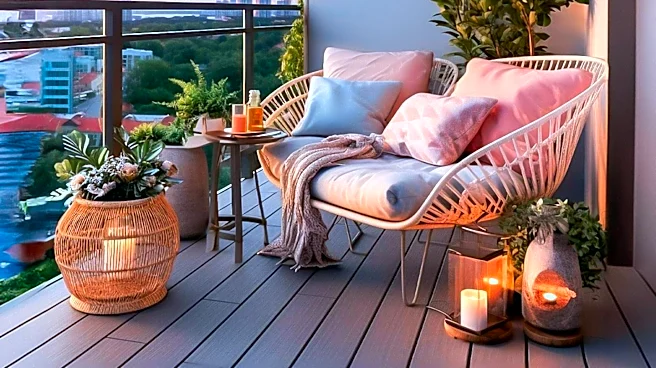
Balcony makeovers are increasingly focusing on maximizing small spaces through strategic design choices. Key recommendations include using compact, foldable seating like bistro sets or folding chairs to ensure mobility and easy storage. Outdoor rugs are suggested
to define the space, add warmth, and introduce color, with polypropylene and recycled-plastic options favored for their weather resistance. Vertical gardening solutions, such as terracotta hanging planters, wall-mounted pockets, and tiered stands, are highlighted to save floor space while adding lush greenery. Additionally, mini herb gardens with plants like basil, mint, and cherry tomatoes are popular for their aesthetic and practical benefits, making balconies feel more alive and useful. Privacy screens made from bamboo or slatted wood are also recommended to create a sense of enclosure without blocking light or airflow, particularly for balconies facing neighbors.
Why It's Important?
The emphasis on efficient and aesthetically pleasing balcony makeovers reflects a growing trend in urban living, where outdoor space is often limited but highly valued. For U.S. city residents, these design strategies offer practical solutions to transform small, often neglected balconies into functional and inviting extensions of their homes. This trend impacts the home furnishings and gardening industries, driving demand for compact, weather-resistant furniture, outdoor rugs, and vertical planting systems. It also influences consumer behavior, encouraging more people to invest in creating personalized outdoor retreats, which can enhance mental well-being and provide a connection to nature in dense urban environments. The focus on renter-friendly and budget-conscious options makes these makeovers accessible to a broader demographic, fostering a more widespread adoption of these design principles.
What's Next?
As urban populations continue to grow and living spaces become more compact, the demand for innovative small-space solutions for balconies is expected to rise. Manufacturers and retailers will likely continue to develop and market more versatile, multi-functional, and aesthetically pleasing outdoor products tailored to small balconies. This could include advancements in modular furniture, integrated lighting solutions, and self-watering vertical garden systems. Additionally, there may be an increased focus on sustainable and eco-friendly materials for outdoor furnishings and planters. Design trends might also lean towards incorporating smart home technology into balcony spaces, such as automated lighting or irrigation systems, further enhancing convenience and usability for urban dwellers seeking to optimize their limited outdoor areas.
Beyond the Headlines
The trend of balcony makeovers extends beyond mere aesthetics, touching upon broader societal shifts towards sustainable living and the prioritization of personal well-being. In an increasingly digital and indoor-centric world, creating a functional and appealing outdoor space, however small, can significantly impact mental health by providing a connection to nature and a dedicated area for relaxation or hobbies. Ethically, the emphasis on weather-wise and durable materials promotes responsible consumption and reduces waste. Culturally, these personalized outdoor spaces reflect a desire for individuality and self-expression within the constraints of urban living. The rise of mini herb gardens also speaks to a growing interest in self-sufficiency and fresh, locally grown produce, even in metropolitan areas, fostering a deeper appreciation for food sources and gardening.