







What's Happening?
The Shikoku Pilgrimage, a 750-mile circular route connecting 88 Buddhist temples and sacred sites on Japan's smallest main island, Shikoku, attracts between 100,000 and 150,000 people annually. Associated with Kobo Daishi, a ninth-century Japanese monk
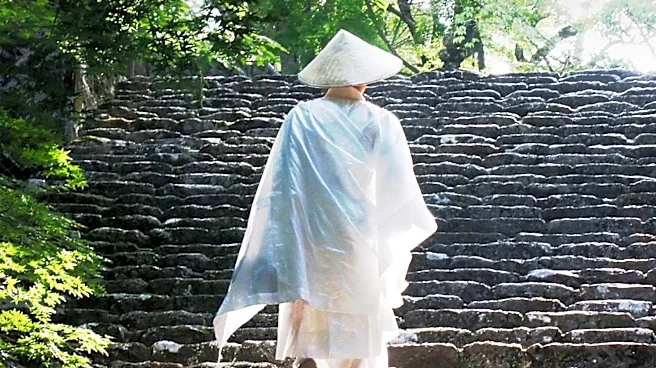
who founded the Shingon school of Buddhism, the pilgrimage offers a blend of spiritual reflection and a chance to disconnect from daily stressors. While the individual sites date back to the eighth century, the full circuit was established between the late 16th and early 17th centuries. Approximately 80% of the route is paved, passing through towns and farmlands, while the remaining 20% involves dirt trails, steep mountainsides, and ancient stone steps through remote wilderness. Pilgrims often stay in traditional ryokan, shukubo (temple stays), and local family inns, many of which provide food and onsens for bathing. Many participants choose to complete only portions of the route, seeking a slower pace of life or spiritual fulfillment. The island of Shikoku, known for its rustic and remote character, maintains traditions longer than Japan's main island of Honshu, with its first bridge connection to Honshu only built in 1988.
Why It's Important?
The Shikoku Pilgrimage highlights the enduring appeal of spiritual journeys and the growing desire for disconnection in an increasingly connected world. For participants, it offers a unique opportunity for self-reflection and gratitude, fostering a sense of inner peace. The pilgrimage also showcases the deep-rooted culture of hospitality, known as 'o-settai,' prevalent on Shikoku. This tradition, where residents believe that helping pilgrims is akin to helping Kobo Daishi himself, creates a welcoming environment that draws people back repeatedly. This cultural aspect not only enriches the experience for pilgrims but also preserves local traditions and community values. The pilgrimage's focus on a specific region, rather than a broad national narrative, allows for a more personal and immersive understanding of Japanese history and culture, emphasizing the lives of ordinary people alongside historical figures and policies. This approach offers a valuable counterpoint to larger, more generalized historical accounts.
What's Next?
The Shikoku Pilgrimage is expected to continue attracting a significant number of domestic and international travelers seeking spiritual enrichment, cultural immersion, and a break from modern life. As awareness of the pilgrimage grows, particularly among those looking for unique travel experiences, there may be increased interest in the more remote and traditional aspects of the route. Local communities along the pilgrimage path will likely continue to benefit from the influx of pilgrims, reinforcing the tradition of 'o-settai' and supporting local businesses such as inns and restaurants. Efforts to maintain the trails and preserve the historical and cultural integrity of the temples and sacred sites will be crucial to ensure the pilgrimage's long-term sustainability. The growing interest in slow travel and authentic cultural experiences could further boost the pilgrimage's popularity, potentially leading to more organized tours and resources for international visitors.
Beyond the Headlines
The Shikoku Pilgrimage offers a profound insight into the interplay between spirituality, community, and personal well-being. The concept of 'o-settai' extends beyond mere hospitality, embodying a philosophical approach to life that values generosity and interconnectedness. This cultural practice suggests a deeper societal fabric where mutual support is ingrained, offering a stark contrast to more individualistic societies. The pilgrimage also serves as a living museum, preserving ancient Buddhist practices and the legacy of Kobo Daishi, while simultaneously adapting to modern needs. The physical challenge of the walk, combined with the spiritual introspection it encourages, can lead to significant personal transformation, highlighting the therapeutic benefits of nature and mindful movement. Furthermore, the pilgrimage's ability to attract individuals from diverse backgrounds, all seeking a common experience of reflection and connection, underscores its universal appeal and its role in fostering cross-cultural understanding.