








What's Happening?
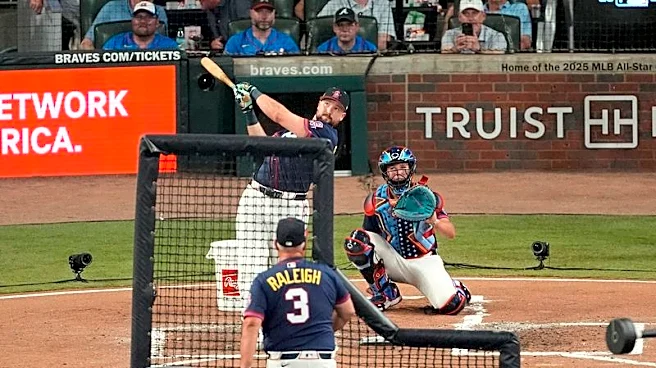
Netflix, in its inaugural year as a Major League Baseball (MLB) broadcast partner, is making a significant change to the Home Run Derby by removing the time clock. This decision marks a departure from recent trends in baseball, where clocks have been
introduced to speed up the game. Netflix's approach, which involves giving batters a fixed number of swings rather than a timed session, aims to improve the viewing experience by reducing player fatigue and allowing fans to focus solely on the competition. The change comes after Netflix secured a three-year, $50 million-per-year deal to broadcast MLB events, including the Home Run Derby and the Field of Dreams game. The Derby, set to take place at Citizens Bank Park, will feature a new format where ties are broken by the longest home run or a three-swing playoff.
Why It's Important?
This move by Netflix could set a precedent for how sports events are broadcasted, potentially influencing other networks and sports leagues. By prioritizing the viewer experience and player performance over traditional time constraints, Netflix is challenging the status quo in sports broadcasting. This could lead to broader changes in how sports are presented to audiences, emphasizing quality over speed. For MLB, this partnership with Netflix represents an opportunity to reach a wider audience and modernize its appeal, particularly among younger viewers who are accustomed to streaming services. The success of this format could encourage other sports to experiment with similar changes, impacting how sports are consumed in the U.S.
What's Next?
As Netflix continues its partnership with MLB, the success of the Home Run Derby's new format will be closely watched. If well-received, it could lead to further innovations in sports broadcasting. Stakeholders, including MLB officials, players, and fans, will likely evaluate the impact of these changes on the game's dynamics and viewer engagement. Additionally, Netflix's approach may prompt other streaming services and networks to reconsider their sports broadcasting strategies, potentially leading to a more competitive and innovative market.