



What's Happening?
Public School, the fashion brand founded by Dao-Yi Chow and Maxwell Osborne, has launched its first ad campaign in nine years, titled “The City is Mine.” This campaign marks their return after a seven-year hiatus and follows their successful reintroduction
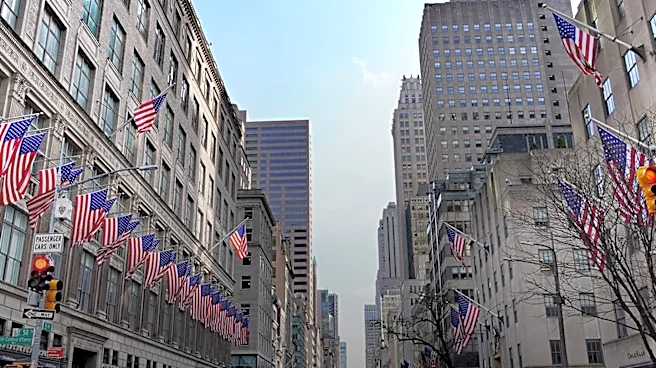
at New York Fashion Week. Photographed by Joshua Woods, the campaign features Idriys Ali-Chow, Scott Barnhill, and MJ Marte, and was shot on film across various New York City locations. The imagery aims to reflect the brand's journey, nodding to its past while looking towards the future. The duo intentionally pursued a slow and deliberate return to the fashion scene, ensuring their creative ideas were fully developed. Their fall collection has been well-received, with retailers such as Bergdorf Goodman, Neiman Marcus, and Saks Fifth Avenue purchasing the line. Public School also plans to open several stores, including a flagship in New York City, to expand its business through owned channels.
Why It's Important?
The return of Public School and its strategic re-entry into the fashion market signifies a notable development in the U.S. retail and design landscape. Their decision to launch a significant ad campaign and establish owned retail channels, including a New York City flagship, indicates a commitment to direct-to-consumer engagement and brand control. This move could influence other designers and brands to reconsider their distribution strategies, potentially shifting focus from solely wholesale to a hybrid model that prioritizes direct customer relationships. The positive reception from major retailers like Bergdorf Goodman and Neiman Marcus suggests a strong market demand for Public School's aesthetic, which could stimulate competition and innovation within the luxury and contemporary fashion segments. Furthermore, the brand's emphasis on a thoughtful, slow return, rather than a rapid re-launch, highlights a potential trend towards more sustainable and creatively driven business practices in an industry often characterized by fast cycles. This approach could resonate with consumers who value authenticity and craftsmanship, potentially influencing broader consumer preferences in the U.S. fashion market.
What's Next?
Public School is set to showcase its spring collection on the catwalk on September 10, which will further define the brand's evolving aesthetic and future direction. The founders, Dao-Yi Chow and Maxwell Osborne, aim to continue refining the brand's codes and developing a long-term uniform. Their strategy includes balancing direct-to-consumer sales with wholesale partnerships, supported by a seed round of funding from friends and family, as well as income generated by the brand itself. The planned opening of a flagship store in New York City, along with other retail locations, will be a critical next step in expanding their owned channels and strengthening their market presence. The success of these new retail ventures and the reception of their upcoming collections will be key indicators of Public School's sustained growth and influence in the U.S. fashion industry. The brand's continued evolution will likely involve further creative collaborations and strategic marketing efforts to maintain momentum.
Beyond the Headlines
Public School's deliberate and measured return to the fashion scene, after a seven-year hiatus, offers a deeper insight into the pressures and opportunities within the U.S. fashion industry. The founders' decision to take time for a 'reset' rather than rushing back, despite no internal conflict, underscores the importance of creative integrity and strategic planning in a highly competitive market. This approach challenges the industry's often fast-paced and trend-driven cycles, suggesting a potential shift towards valuing thoughtful development over constant novelty. The brand's emphasis on storytelling through its campaign, referencing its past while looking to the future, highlights the growing significance of narrative and authenticity in connecting with consumers. Furthermore, the move towards establishing owned retail channels reflects a broader industry trend where brands seek greater control over their customer experience and brand messaging, moving beyond traditional wholesale models. This could lead to more personalized shopping experiences and a stronger brand identity, ultimately reshaping consumer expectations and retail strategies across the U.S. fashion landscape.