





What's Happening?
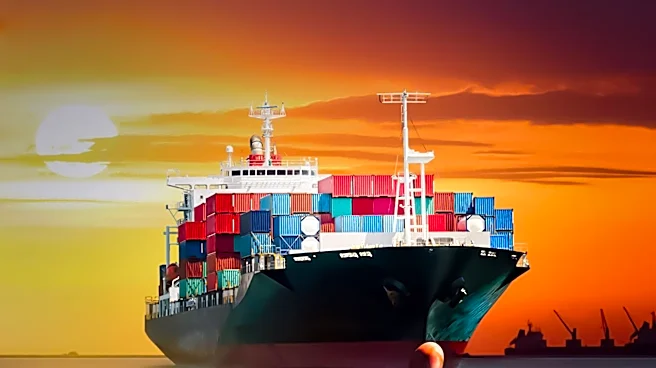
A new initiative, dubbed the “Pink Corridor,” is being launched to investigate the feasibility and challenges of establishing nuclear-powered transatlantic container shipping. This project is a collaborative effort led by Lloyd’s Register and A.P. Moller
- Maersk, in conjunction with the U.S. Port of Charleston, South Carolina, and the UK Port of Felixstowe. The primary goal is to examine the security and safeguarding requirements necessary for the theoretical deployment of a nuclear-powered containership route between the two nations. This development follows recent announcements by the U.S. Maritime Administration (MARAD), which signed an agreement with UK-based Core Power envisioning a fleet of 50 nuclear-powered merchant vessels. MARAD also entered into agreements with the Port of Long Beach, California, and the Port of Corpus Christi, Texas, to explore nuclear projects, indicating a growing U.S. interest in civil maritime nuclear applications.
Why It's Important?
The exploration of nuclear-powered commercial shipping represents a significant potential shift in the maritime industry, driven by the need for more sustainable operations and reduced carbon emissions. The “Pink Corridor” project, by focusing on a transatlantic route, directly involves U.S. ports and companies, highlighting the U.S.'s commitment to exploring advanced nuclear technology for commercial shipping. This initiative could position the U.S. at the forefront of developing environmentally friendly shipping solutions, potentially leading to a competitive advantage in global trade. The project will address critical areas such as ship security, safeguards, cyber resilience, emergency response, insurance regimes, and the alignment of maritime and nuclear regulatory expectations. Successfully navigating these challenges could unlock a new era of shipping, reducing reliance on fossil fuels and contributing to broader climate goals. The involvement of major U.S. ports like Charleston, Long Beach, and Corpus Christi signifies a strategic investment in future maritime infrastructure and technology.
What's Next?
The initial phase of the “Pink Corridor” project will focus on providing a structured basis for collaboration, helping stakeholders understand the practical requirements, existing gaps, and future work needed before a nuclear maritime corridor can be considered. The outcomes of this phase will inform the scope of a potential second phase, which will delve deeper into engineering, regulatory, legislative, security, and safeguards frameworks for nuclear merchant ships. This will likely involve extensive research, pilot programs, and the development of new international standards and protocols for nuclear-powered vessels. Reactions from major stakeholders, including environmental groups, regulatory bodies, and other shipping companies, will be crucial in shaping the project's trajectory. The U.S.-UK Technology Prosperity Deal and its bilateral commitment to civil maritime nuclear applications will continue to provide a framework for this development, potentially leading to further joint ventures and policy alignments between the two nations.
Beyond the Headlines
The re-emergence of interest in nuclear propulsion for commercial shipping, after earlier attempts in the 1950s and 60s, reflects a profound shift in global priorities towards sustainability and energy independence. This initiative goes beyond mere technological advancement; it touches upon complex ethical, legal, and cultural dimensions. Public perception and acceptance of nuclear technology in commercial applications, particularly in densely populated port areas, will be a significant factor. The development of robust international regulatory frameworks and safety protocols will be paramount to ensure public trust and prevent environmental risks. Furthermore, the project could trigger long-term shifts in global trade routes and port infrastructure, favoring those equipped to handle nuclear-powered vessels. The 'Pink Corridor' could also stimulate innovation in small modular reactor (SMR) technology, making it more viable for maritime applications and potentially influencing other sectors seeking clean energy solutions. This endeavor represents a bold step towards a future where global commerce is powered by advanced, low-carbon energy sources.