




What's Happening?
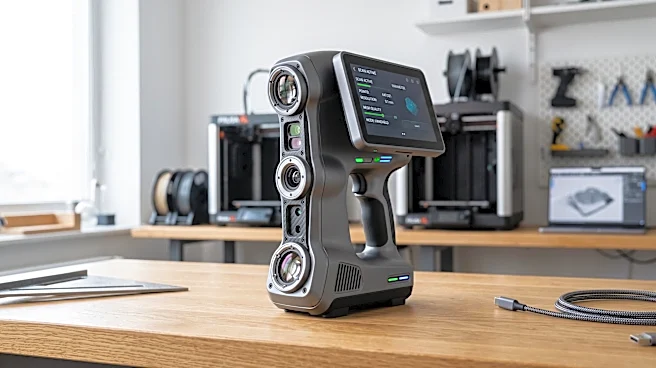
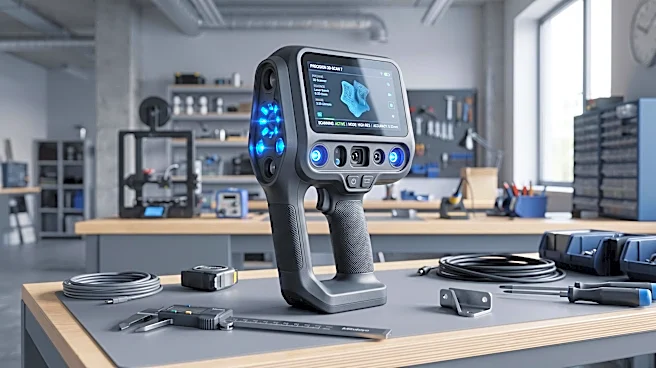
Bambu Lab, a company known for its desktop 3D printers, has expanded its product line by launching its first 3D scanner, the S1. Priced at $1,699, the S1 is a wireless handheld device that integrates both blue laser and infrared structured light technologies.
It boasts an accuracy of up to 0.02 mm and a scanning speed of up to 2,880,000 points per second. The S1 comes bundled with Bambu Scan, a free professional application that offers a comprehensive suite of editing and inspection tools without requiring a separate license. This software is designed to streamline the workflow from scanning an object to 3D printing it, allowing for one-click export to Bambu Studio, the company's slicer software. The device features a 3.5-inch HD touchscreen, Wi-Fi 6 connectivity, and two 4,800 mAh batteries providing up to 3.5 hours of operation. The S1 offers multiple scanning modes tailored for different object sizes and types, including specific presets for industrial parts, artworks, and even human faces.
Why It's Important?
Bambu Lab's entry into the 3D scanning market signifies a strategic move to offer a more integrated ecosystem for 3D model creation and production. By providing a high-accuracy scanner with free professional software, Bambu Lab aims to lower the barrier to entry for users who might otherwise face significant additional costs for software licenses. This move could intensify competition within the 3D scanning and printing industry, as other printer manufacturers like ELEGOO and Creality are also venturing into the scanner market. The integration of scanning directly with printing capabilities, facilitated by software like Bambu Scan and Bambu Studio, could simplify the entire 3D workflow for consumers and professionals, potentially accelerating the adoption of 3D printing for various applications, from rapid prototyping to artistic creation and reverse engineering. The emphasis on free, comprehensive software could disrupt the traditional model where professional 3D scanning software often costs as much as or more than the hardware itself.
What's Next?
The introduction of the Bambu Lab S1 is likely to spur further innovation and competition in the 3D scanning and printing sectors. Other manufacturers may respond by enhancing their own integrated solutions, improving software offerings, or adjusting pricing strategies to remain competitive. Bambu Lab's strategy of offering free professional software could pressure competitors to re-evaluate their software licensing models. The company plans to release macOS support for Bambu Scan soon, which will broaden its user base. Additionally, accessories like an electric turntable and a Wi-Fi adapter will be sold separately, indicating potential for further product ecosystem expansion. The success of the S1 will likely depend on user adoption, the continued development of Bambu Scan, and how effectively Bambu Lab can leverage its existing market share in 3D printers to drive scanner sales.
Beyond the Headlines
Bambu Lab's move into 3D scanning highlights a broader trend in the additive manufacturing industry: the convergence of hardware and software solutions to create seamless end-to-end workflows. This integration not only simplifies the user experience but also fosters a more closed ecosystem, potentially increasing customer loyalty. The provision of free, high-quality software challenges the traditional revenue models of many 3D technology companies, which often rely on recurring software license fees. This could lead to a shift in how value is perceived and delivered in the industry, with hardware becoming a gateway to a comprehensive, integrated digital manufacturing platform. Furthermore, by making advanced 3D scanning more accessible, Bambu Lab could empower a wider range of creators, educators, and small businesses to engage with 3D modeling and printing, potentially democratizing access to advanced manufacturing tools and fostering new applications across various fields.