





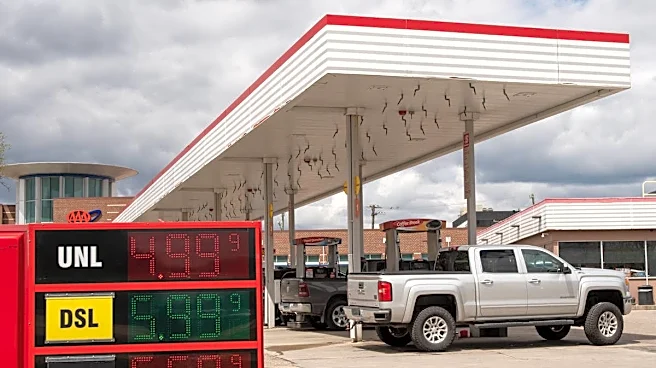


What's Happening?
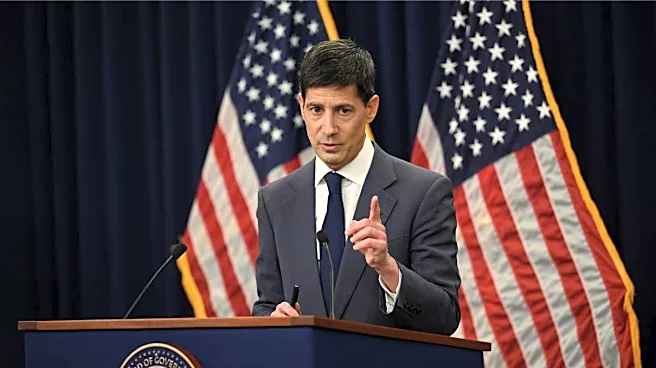
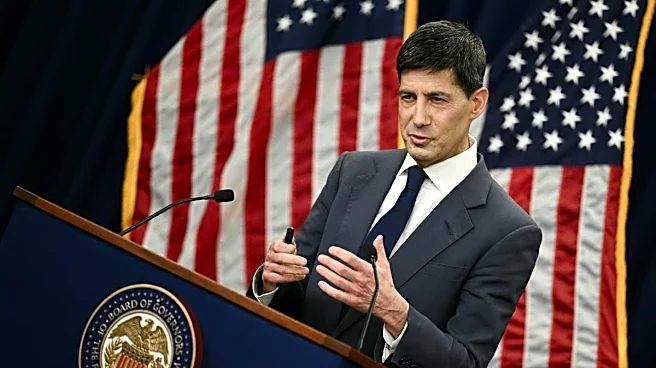
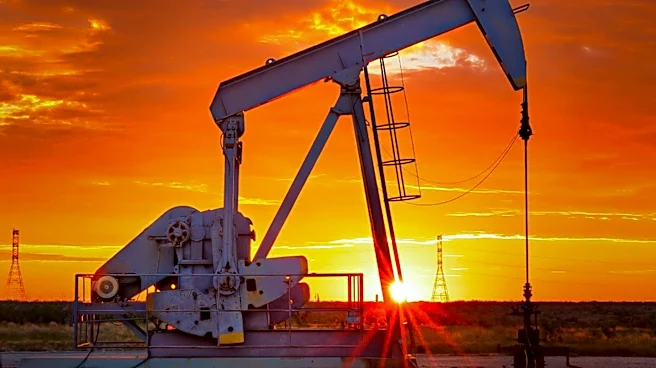
Oil prices have begun to decline, which could pose new challenges for the Federal Reserve. While cheaper crude can reduce headline inflation and ease consumer pressure, it may also inject more money into an already overheated economy. This situation could lead
to increased demand, potentially exacerbating inflationary pressures. Apollo's chief economist, Torsten Sløk, highlights that the reopening of the Strait of Hormuz is expected to further stimulate the economy, potentially forcing the Fed to raise interest rates. The current market narrative suggests that lower oil prices, while beneficial for consumers, could complicate the Fed's efforts to manage inflation.
Why It's Important?
The decline in oil prices could have a dual impact on the U.S. economy. On one hand, it may alleviate some inflationary pressures by reducing costs for consumers and businesses. On the other hand, it could stimulate economic activity, leading to higher demand and potentially higher inflation. This complex dynamic presents a challenge for the Federal Reserve as it seeks to balance economic growth with inflation control. The Fed's response will be crucial in shaping economic conditions, influencing everything from consumer spending to business investment.
What's Next?
The Federal Reserve will need to carefully assess the impact of lower oil prices on the economy. As the Fed's preferred inflation gauge, the PCE, continues to be monitored, any significant changes in economic indicators could prompt a reevaluation of monetary policy. The central bank may consider adjusting interest rates if inflationary pressures persist, with potential implications for financial markets and economic stability.