









What's Happening?
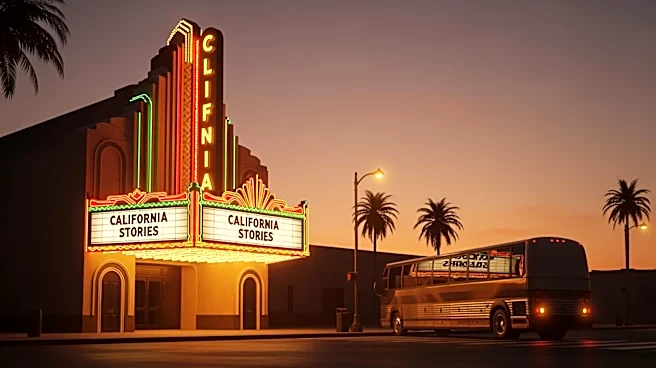
New Theater Hollywood has wrapped up its third season of 'California Gothic: A Bus Tour,' an immersive theatrical experience set on a moving bus. The tour, which combines elements of Tinseltown history, public intellectualism, and performance art, has attracted
a predominantly local audience. The show, written by Oliver Misraje, takes participants through Hollywood, offering a narrative that explores the 'death of the California dream' and the city's historical and cultural landscape. The tour features performances by actors portraying iconic figures like Marilyn Monroe and other Hollywood legends. Despite its whimsical nature, the tour aims to provide a sincere homage to the traditional Hollywood bus tour format. The production will return in October for a special 'ghost tour' edition.
Why It's Important?
The 'California Gothic: A Bus Tour' highlights a growing trend in entertainment where immersive and interactive experiences are becoming more popular, particularly among local audiences. This shift indicates a demand for more engaging and thought-provoking content that goes beyond traditional sightseeing. The tour's success also underscores the potential for small theaters and independent productions to thrive by offering unique cultural experiences. By focusing on local history and culture, the production fosters a deeper connection with the community, challenging the notion that Hollywood is solely a tourist destination. This approach could inspire other theaters and cultural institutions to explore similar immersive formats, potentially revitalizing interest in local arts and history.
What's Next?
The tour is set to return in October with a 'ghost tour' edition, co-written by Misraje and Ruby McCollister. This upcoming version is expected to build on the success of previous runs by incorporating new elements and characters. The evolving nature of the show suggests that it will continue to adapt and respond to audience feedback and the dynamic street life of Hollywood. As the production gains popularity, it may attract attention from larger theater companies or investors interested in expanding the concept to other cities. Additionally, the show's focus on local culture and history could lead to collaborations with educational institutions or cultural organizations, further enhancing its impact and reach.