






What's Happening?
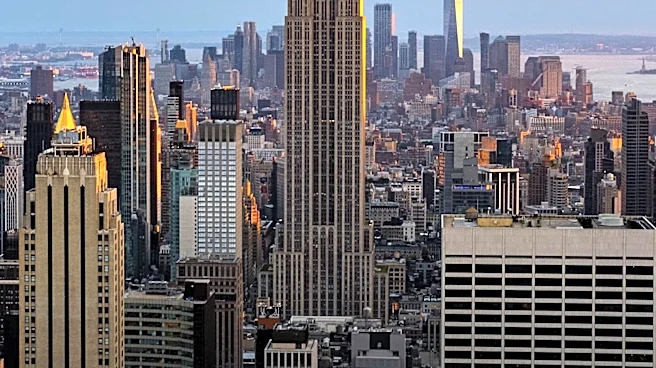
Midtown Manhattan's office market has fully recovered from the occupancy losses experienced during the pandemic, with available space matching March 2020 figures at 27.7 million square feet by the end of the third quarter. This marks Midtown as the first
New York City submarket to achieve such a recovery. Over 10 million square feet of leases were signed across Manhattan, positioning the borough's office market for its most active year since 2000. The tightening market conditions have enabled owners of Class-A buildings to increase asking rents to an unprecedented average of $85.45 per square foot. Colliers Executive Managing Director of Research and Business Development Franklin Wallach noted the rapid pace of recovery throughout the summer and early autumn. Midtown's availability rate has decreased to 11.9%, and its average asking rent is now $85.08 per square foot, representing a 5.4% year-over-year increase, the fastest annual third-quarter jump since 2014. Notably, Proskauer Rose signed the largest deal of the quarter, expanding by 478,000 square feet at 11 Times Square. The tech hub of Midtown South also saw record-breaking activity, with 4.8 million square feet of leasing, driven by a 466,000 square foot lease by Anthropic at 330 Hudson Street. Artificial intelligence firms have significantly contributed to this demand, leasing nearly 1.1 million square feet of Manhattan office space in the third quarter, following 800,000 square feet in Q2 and 790,000 square feet in all of 2025.
Why It's Important?
The robust recovery of Midtown Manhattan's office market signifies a critical turning point for the broader U.S. commercial real estate sector, particularly in major urban centers. The return to pre-pandemic occupancy levels and record-high rents indicate a strong resurgence in demand for prime office spaces, challenging earlier predictions of a permanent shift to remote work. This trend empowers landlords, shifting the advantage in lease negotiations and potentially leading to reduced tenant concessions that were common during the pandemic. The significant leasing activity, especially from artificial intelligence firms, highlights the evolving needs of high-growth industries for physical office presence, suggesting that innovation and collaboration continue to drive demand for well-located and modern office environments. The recovery in Manhattan could serve as a bellwether for other major U.S. cities, influencing investment decisions, development strategies, and the overall economic outlook for urban commercial real estate. Conversely, the contrasting performance in Downtown Manhattan, which lost momentum, suggests a bifurcated market where location and industry-specific demand play crucial roles in recovery trajectories. This dynamic could lead to increased investment in areas demonstrating strong tenant interest and modern infrastructure, while older or less desirable properties in other submarkets might face continued challenges.
What's Next?
As the Manhattan office market enters the final quarter of the year, the current momentum suggests a continued landlord-favorable environment. The scramble for space, coupled with the conversion of some office buildings to residential units, is expected to further reduce the availability rate and sustain upward pressure on rents across various segments of the market, not just the high-end. Stakeholders, including real estate developers, investors, and corporate tenants, will closely monitor whether this trend extends to other submarkets and property classes. The sustained demand from artificial intelligence and technology firms indicates a potential long-term shift in the tenant landscape, with these sectors likely to remain key drivers of office space absorption. This could lead to a focus on developing or retrofitting office spaces that cater to the specific needs of tech companies, such as advanced infrastructure and collaborative environments. The market's performance in the coming months will also provide insights into the broader economic health of New York City and its ability to attract and retain businesses, influencing municipal tax revenues and employment figures. The ongoing disparity between Midtown and Downtown suggests that future investment and development may concentrate on areas demonstrating clear tenant demand and strong recovery signals.
Beyond the Headlines
The resurgence of Midtown Manhattan's office market carries deeper implications beyond immediate economic indicators. It challenges the narrative of a permanent paradigm shift towards remote work, suggesting that for many industries, particularly those in high-growth sectors like AI, the physical office remains a critical hub for innovation, collaboration, and corporate culture. This trend could lead to a re-evaluation of urban planning and development strategies, with renewed emphasis on creating vibrant, mixed-use urban centers that attract both businesses and talent. The increasing rents and tightening availability also raise questions about affordability and accessibility for smaller businesses and startups, potentially exacerbating economic disparities within the city. Furthermore, the conversion of office buildings to residential units, while contributing to reduced office availability, also highlights a broader urban transformation, addressing housing shortages but potentially altering the character of traditional business districts. The sustained demand from the tech sector, particularly AI, underscores the growing influence of these industries on urban economies and real estate markets, potentially leading to specialized infrastructure and amenity development tailored to their needs. This recovery also reflects a broader confidence in the long-term economic vitality of New York City as a global business hub.