








What's Happening?
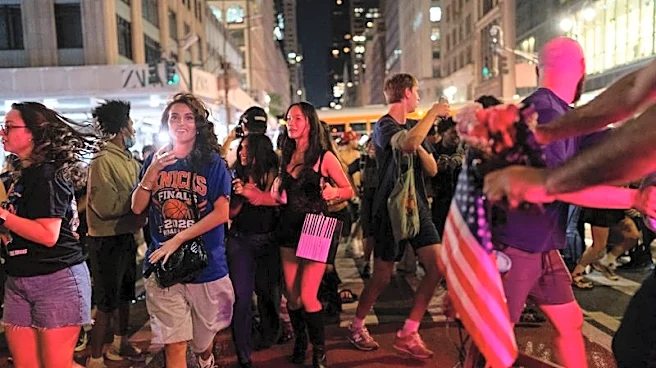
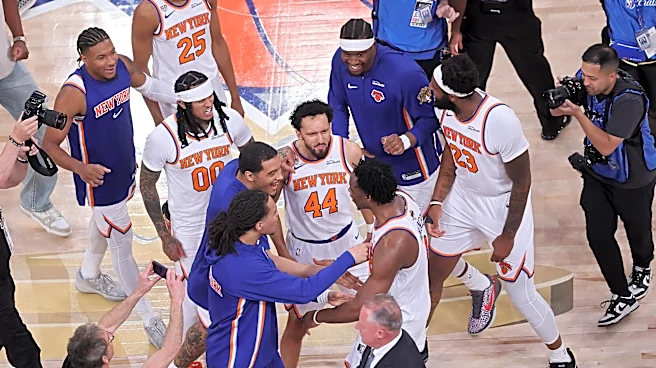
Arthur Brooks, a social scientist and happiness expert, discusses the recent victory of the New York Knicks in the NBA finals, their first since 1973. This event has sparked widespread celebration across New York City, with fans from various backgrounds
coming together in a display of shared joy. Brooks emphasizes the role of sports fandom as a significant source of happiness, citing studies that show sports fans are generally happier and feel more connected than non-fans. The Knicks' victory has not only brought joy to their fans but also highlighted the communal and emotional benefits of sports fandom.
Why It's Important?
The Knicks' victory underscores the broader impact of sports on societal happiness and community bonding. Sports fandom can enhance social connections and personal well-being, as evidenced by the spontaneous celebrations and unity among New Yorkers. This phenomenon is particularly relevant in urban settings where diverse populations can find common ground through shared sports experiences. The event also highlights the potential for sports to contribute positively to mental health and social cohesion, offering a counterbalance to the often divisive nature of modern life.
What's Next?
Following the Knicks' victory, there may be increased interest in sports as a means of fostering community and enhancing personal happiness. This could lead to more research into the psychological benefits of sports fandom and potentially influence public policy to support sports and recreational activities. Additionally, the Knicks' success might inspire other teams and cities to invest in their sports programs, recognizing the broader social and emotional benefits they can provide.
Beyond the Headlines
The Knicks' victory and the resulting celebrations also reflect the cultural significance of sports in American society. It highlights how sports can serve as a unifying force, transcending social and cultural barriers. This event may prompt discussions about the role of sports in promoting inclusivity and diversity, as well as its potential to address broader societal issues through community engagement and support.