








What's Happening?
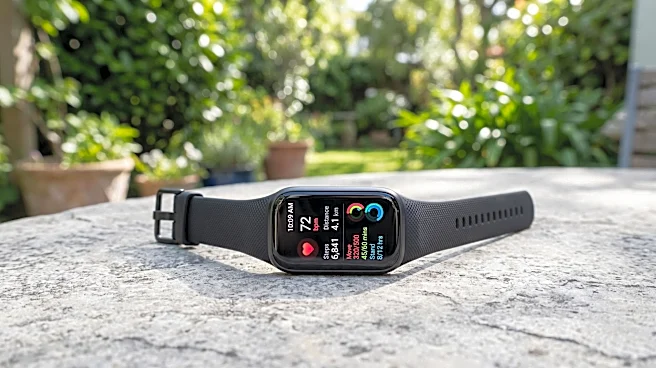
Amazfit has introduced two versions of its smart band device, the Helio Strap and the Helio Strap Pro, both designed to track daily health metrics. These devices offer features such as heart rate variability measurements, sleep monitoring, recovery signals,
and fitness equipment tracking. The Helio Strap Pro is presented as an upgraded version of the standard Helio Strap, incorporating additional technology like a geomagnetic sensor and a waist sensor for more precise body monitoring during workouts. While the Pro version boasts enhanced measuring capabilities and a slightly longer battery life, it comes at double the cost of the base model. The standard Helio Strap is already noted for its robust workout and recovery tracking, leading to questions about the value proposition of upgrading to the more expensive Pro version.
Why It's Important?
The introduction of the Amazfit Helio Strap Pro highlights a common dilemma in the wearable technology market: the balance between advanced features and cost-effectiveness. For consumers, this means evaluating whether the incremental benefits of a 'Pro' version justify a significantly higher price point, especially when the base model already offers substantial functionality. This trend impacts the broader fitness technology industry by pushing manufacturers to innovate while also considering market demand for affordability. Companies must carefully segment their product lines to cater to both budget-conscious users and those seeking premium features. The debate over the Helio Strap Pro's value underscores the importance of clear differentiation and tangible benefits for higher-priced tech products to succeed in a competitive market.
What's Next?
The market response to the Amazfit Helio Strap Pro will likely influence future product development strategies for Amazfit and its competitors. If consumers perceive the Pro version as offering insufficient value for its price, Amazfit may need to re-evaluate its pricing or further enhance the unique features of its premium offerings. Conversely, if the Pro version gains traction, it could encourage other brands to introduce more tiered product lines with varying levels of advanced sensors and analytics. We may also see a trend towards more modular wearable devices, allowing users to upgrade specific components rather than purchasing an entirely new device. The ongoing competition will likely drive down prices for core features while pushing innovation in specialized health monitoring capabilities.
Beyond the Headlines
The discussion around the Amazfit Helio Strap Pro's value extends beyond mere features and price, touching upon the broader consumer perception of 'necessity' versus 'luxury' in health technology. As wearables become more ubiquitous, consumers are increasingly discerning about what constitutes a truly valuable upgrade. This can lead to a more informed consumer base that demands tangible improvements rather than incremental updates. Furthermore, the focus on advanced sensors like geomagnetic and waist sensors points to a future where wearables could offer highly granular data, potentially moving beyond general fitness tracking to more specific biomechanical analysis. This could have implications for personalized training, injury prevention, and even early detection of certain health conditions, provided the data is accurate and actionable. The ethical implications of collecting such detailed personal data also remain a significant consideration.