





What's Happening?
The smart home market is expanding beyond traditional categories like security cameras and thermostats to include core infrastructure such as water management systems. Parks Associates has added smart kitchen faucets and smart showers to its Smart Home
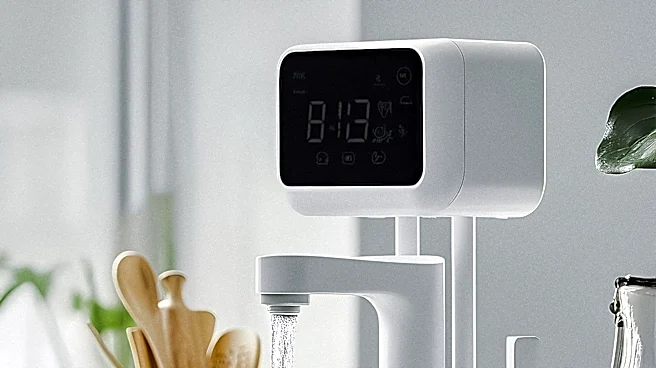
and Security Market Tracker, recognizing their growing significance. These smart plumbing products, ranging from $400 to over $8,000, offer premium features like voice control, remote activation, programmable presets, and precise temperature management. Manufacturers are leveraging these digital capabilities to differentiate products that are integral to design and remodeling decisions. A recent Parks Associates survey of 8,000 U.S. internet households indicates a rising trend in smart home device owners seeking interoperable experiences across their entire homes, with kitchen and bathroom routines showing increased integration. Despite this growth, smart plumbing largely operates as a standalone connected system, with limited interoperability with broader smart home platforms like Matter or Apple Home.
Why It's Important?
The emergence of smart plumbing as a premium connected home category signifies a shift in consumer expectations and market opportunities. These high-value products create new distribution and installation channels for builders, plumbers, electricians, kitchen and bath designers, and home technology integrators. For smart home platforms, this presents both a challenge and an opportunity to extend automation and control beyond existing categories, as consumers increasingly expect seamless integration across all home devices. The focus on water management also attracts interest from utilities, insurers, and security providers, who see potential in reducing water damage, optimizing resource consumption, and offering comprehensive home monitoring. This expansion into plumbing infrastructure could lead to more holistic smart home ecosystems that connect water, energy, security, lighting, and comfort into coordinated routines, enhancing overall home efficiency and user experience.
What's Next?
The smart plumbing sector is poised for further integration into the broader smart home ecosystem. While current smart faucets and showers primarily rely on Wi-Fi and support voice assistants like Amazon Alexa and Google Assistant, future developments will likely focus on achieving broader interoperability with major smart home platforms such as Matter, Thread, and Apple Home. This will enable more cohesive and automated home routines. Professional installation will continue to play a crucial role, particularly for smart shower systems, creating ongoing opportunities for contractors and integrators. Manufacturers are also expected to enhance personalization features, offering remote activation, programmable experiences, and multi-user support. Additionally, the strategic connection to water management will drive innovation in usage information, eco modes, and integration with water-management services, potentially leading to new partnerships between smart plumbing companies and utilities or insurers.
Beyond the Headlines
The integration of smart plumbing into the connected home ecosystem raises deeper implications beyond mere convenience. It highlights a growing consumer demand for personalized and resource-efficient living spaces, pushing manufacturers to innovate in areas that combine luxury with sustainability. The high price points of these products suggest a market segmentation where premium features drive adoption among consumers willing to invest in advanced home technology. Furthermore, the reliance on professional installation for many smart plumbing systems underscores the enduring importance of skilled trades in an increasingly automated world. As these systems become more sophisticated, ethical considerations around data privacy related to water usage and personal routines may also emerge, requiring robust security measures and transparent data policies from manufacturers. This trend could also accelerate the development of smart home standards that ensure seamless interoperability and a truly integrated living experience.