






What's Happening?
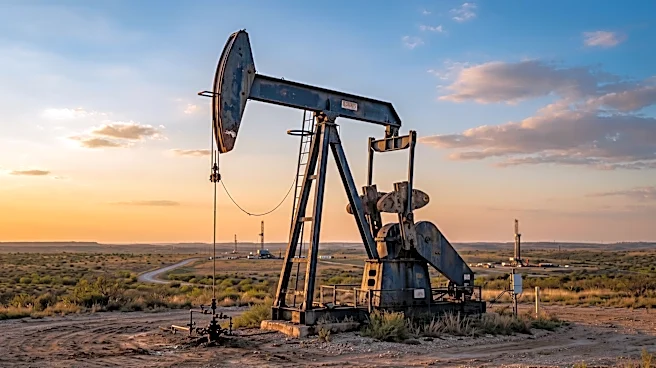
A new paper from the Brookings Papers on Economic Activity (BPEA) reveals that the U.S. economy's response to oil price spikes has fundamentally changed due to the nation's transition from a major petroleum importer to a net exporter. Historically, oil price surges
were often followed by U.S. recessions. However, recent events, such as the 2022 oil price spike following Russia's invasion of Ukraine and a subsequent rise after the Iran war, have not led to recessions. Authors Diego Känzig of Northwestern University, James Stock of Harvard University, and Luca Zanotti of Northwestern University, discussed their findings on the Brookings Podcast on Economic Activity. They attribute this shift to the growth of the domestic oil industry, which means higher oil prices now benefit more Americans through increased employment and stock prices, leading to broader economic activity. While oil price spikes still contribute to inflation, their overall impact on the U.S. economy is now more muted, and potentially even expansionary, compared to previous decades.
Why It's Important?
This research significantly redefines the understanding of how oil price shocks affect the U.S. economy, challenging long-held assumptions. For decades, policymakers and economists viewed oil price increases as a precursor to economic downturns. The U.S. becoming a net oil exporter fundamentally alters this dynamic, suggesting that the nation is now more akin to oil-producing countries like Norway or Saudi Arabia in its macroeconomic response to higher oil prices. This shift has profound implications for economic forecasting, monetary policy, and national security. The Federal Reserve, for instance, may no longer face the same difficult trade-off between combating inflation and preventing a recession in the event of an oil shock, potentially allowing for more aggressive responses to inflationary pressures. The findings also highlight a broad-based economic benefit from higher oil prices, extending beyond the oil sector to consumer spending and stock valuations, which could influence investment strategies and regional economic development.
What's Next?
The findings from this Brookings paper are expected to influence how policymakers, particularly those at the White House, Treasury, and the Federal Reserve, assess and respond to future oil price fluctuations. The traditional policy advice regarding oil shocks may need to be re-evaluated, potentially leading to different economic strategies in response to geopolitical events affecting oil markets. Further research is needed to fully understand all the mechanisms at play, especially concerning the precise estimation of price responses and the long-term implications of this new economic reality. The paper suggests that the U.S. economy's increased resilience to oil price shocks could lead to more stable economic growth, even in the face of global energy market volatility. However, the inflationary aspect of oil price spikes remains a concern, requiring careful monitoring and appropriate monetary policy adjustments.
Beyond the Headlines
The transformation of the U.S. from a net oil importer to a net exporter represents a significant structural change in the global energy landscape, with far-reaching implications beyond immediate economic responses. This shift not only alters the U.S.'s economic vulnerability but also influences its geopolitical standing and energy independence. The paper's finding that even energy-intensive sectors like airlines can see rising equity prices due to indirect economic benefits challenges conventional wisdom and suggests a complex interplay of direct costs and broader economic demand. This nuanced understanding is crucial for investors and businesses in various sectors to adapt their strategies. Furthermore, the change in how monetary policy can respond to oil shocks—potentially more aggressively against inflation without exacerbating output issues—could lead to a more stable economic environment, albeit with ongoing debates about the distribution of benefits and costs across different segments of society.