


What's Happening?
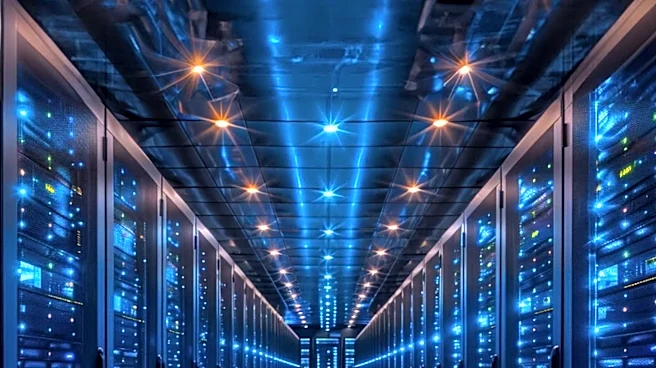
The IEEE Standards Association (SA) Industry Connections group has released a report titled 'Review of Industry Efforts and Standards: Data Center Design for IT Load Protection,' addressing the growing challenges in harmonizing data center operations
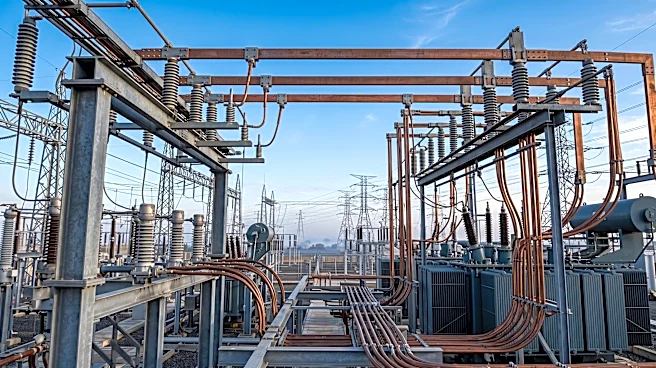
with the electrical grid. This initiative follows incidents like a 2024 event in Northern Virginia where 1,500 MW of data center load unexpectedly dropped off the grid due to a transmission line fault, highlighting a critical need for improved coordination. The report identifies five key challenges: a widening power gap due to AI-driven demands (from a few kilowatts per rack to potentially over 500 kW), emerging grid-disturbance conflicts, protection mismatches in conventional relay systems, evolving regulatory requirements for interconnection, and a widening gap in standardization. The report proposes recommendations focusing on creating standardized AI load models, developing load reporting decomposition standards, and agreeing on common terms for workload classification.
Why It's Important?
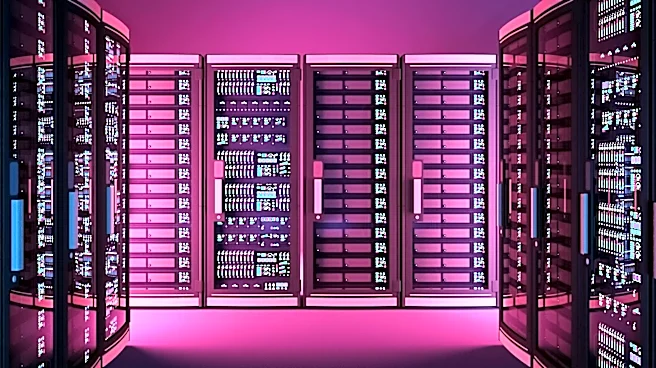
The rapid expansion of data centers, particularly those supporting artificial intelligence, is placing unprecedented demands on the U.S. electrical grid. The report underscores the critical need for new standards and guidelines to ensure grid stability while protecting vital IT loads. Without proper coordination and standardized practices, the increasing power consumption and unique load characteristics of AI data centers could lead to more frequent grid disturbances, impacting reliability for all consumers. This issue affects not only the technology sector but also utilities, regulators, and ultimately, the broader economy that relies on both stable power and robust digital infrastructure. The recommendations aim to foster a common understanding and framework for data center operators and grid managers to negotiate flexibility and ensure seamless integration.
What's Next?
IEEE SA is actively encouraging data center operators, utilities, grid operators, equipment manufacturers, and regulators to provide feedback on the report's recommendations. The goal is to develop new standards and guidelines in areas such as coordinating ride-through and control settings, establishing protocols for minimum disturbance-telemetry and flexibility signaling, and securing protection relay messages. Future work will also focus on extending DC distribution, implementing hierarchical protection, and integrating direct-to-chip liquid cooling for high-density racks. The ultimate objective is to achieve harmony between data centers and the grid, providing specific requirements for interface design and clearly defined, measurable interoperability needs to support the next decade of capacity growth.
Beyond the Headlines
The challenges outlined in the IEEE SA report extend beyond technical specifications, touching upon the fundamental infrastructure supporting the digital economy. The shift towards AI-driven data centers represents a significant evolution in power demand, requiring a re-evaluation of traditional grid management and protection strategies. This situation highlights the interconnectedness of technological advancement and critical infrastructure, where innovation in one sector directly impacts the stability and resilience of another. The call for standardized models and common terminology reflects a broader need for inter-industry collaboration to address complex, systemic challenges, ensuring that the benefits of AI and advanced computing can be realized without compromising essential services.