





What's Happening?
The integration of Artificial Intelligence (AI) into the job search process has become widespread, with both job seekers and employers increasingly utilizing these tools. Job seekers are leveraging AI to enhance resumes, customize cover letters, research
potential employers, prepare for interviews, and identify suitable job opportunities. This has led to a surge in polished applications, as AI can quickly refine language, correct errors, and match keywords to job descriptions. However, this widespread adoption also means that the competitive advantage once offered by using AI is diminishing, as nearly all applicants now have access to similar technological assistance. The challenge for job seekers is no longer simply using AI, but using it thoughtfully to stand out in a crowded and technologically-assisted applicant pool.
Why It's Important?
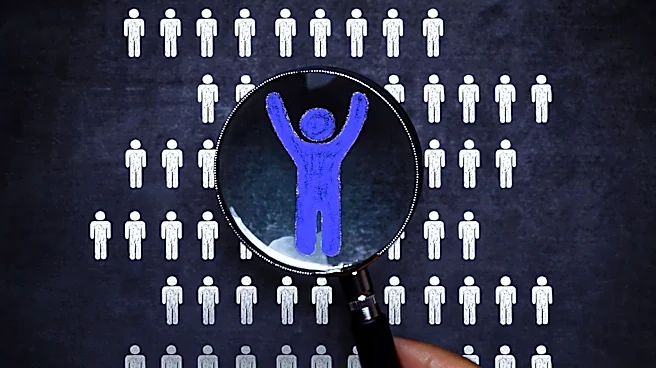
The pervasive use of AI in hiring fundamentally alters the dynamics of the U.S. job market. For job seekers, it means that a technically perfect resume, while still necessary, is no longer sufficient to guarantee an interview. The emphasis shifts from mere polish to demonstrating genuine experience and unique qualifications that AI cannot replicate. Employers, on the other hand, are faced with a higher volume of seemingly qualified applications, necessitating more sophisticated AI screening tools. This creates a cycle where AI is used to get past AI, potentially depersonalizing the initial stages of recruitment. The real-world impact is that human elements like specific accomplishments, personal narratives, and networking become even more critical for differentiation, as AI can easily generate generic, yet well-phrased, content.
What's Next?
Job seekers will need to evolve their strategies beyond basic AI utilization. The focus will likely shift towards using AI as a supportive tool for editing, research, and practice, rather than as a primary content generator. Emphasizing unique experiences, quantifiable achievements, and personal stories that AI cannot invent will become paramount. Career coaching and human connection, such as networking and direct engagement with employers, are expected to gain increased importance in helping candidates articulate their authentic value. Employers will continue to refine their AI-driven screening processes, making it crucial for applicants to not only meet keyword requirements but also to convey a distinct and credible professional identity that resonates beyond automated filters.
Beyond the Headlines
The rise of AI in job applications raises deeper ethical and practical considerations. There's a risk of job seekers losing their authentic voice if they rely too heavily on AI to craft their narratives, potentially leading to a homogenization of applications. This could make it harder for employers to discern genuine talent and personality. Furthermore, the increasing reliance on AI for initial screening could inadvertently introduce biases present in the algorithms or data sets, potentially disadvantaging certain groups of applicants. The long-term shift could see a greater emphasis on verifiable skills and portfolios over traditional resume formats, and a renewed appreciation for the human element in the hiring process, particularly in later interview stages where interpersonal skills and genuine passion can be assessed.